
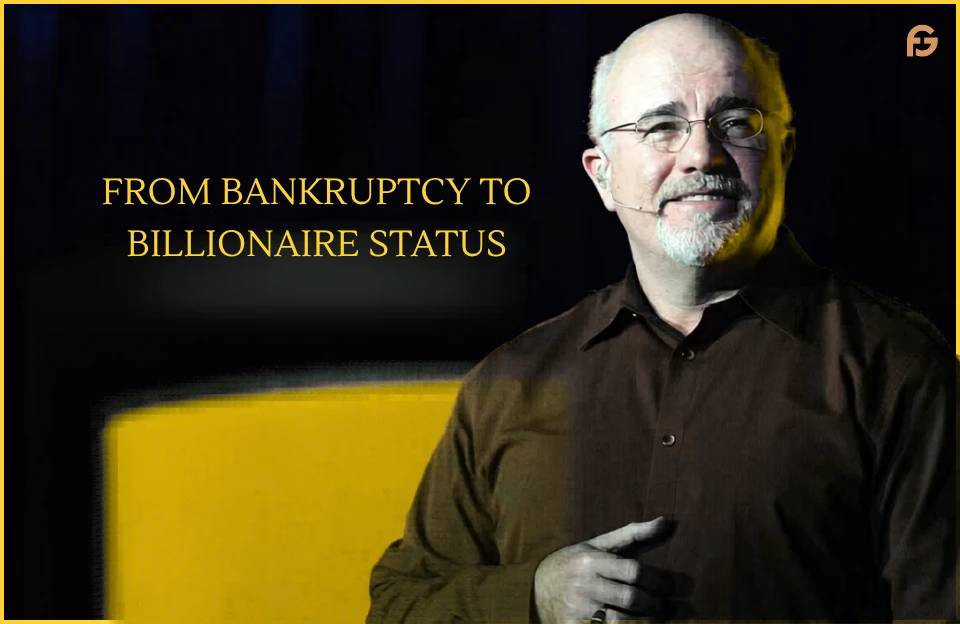
Dave Ramsey’s money rules aren’t just radio talking points. They’re what he used to rebuild his own life after filing for bankruptcy at 28, and understanding that distinction changes how you read everything he teaches. By his mid-twenties, he had built a $4 million real estate portfolio. Then a single bank acquisition triggered the collapse: lenders called in his loans simultaneously, and he had nothing to cover them.
He lost nearly everything. What followed was a textbook case of financial freedom from bankruptcy, rebuilt through three decades of discipline, the baby steps personal finance system he developed in the wreckage, and a debt snowball method that millions of people now follow. A self-published book became a bestseller. A local radio show became a national platform. Ramsey Solutions grew into an empire generating $300 million annually.
Dave Ramsey’s net worth in 2026 is estimated at $200 million, earned entirely on his own terms and entirely without debt. This is how he actually got there, and what you can take from it.
Why the Bankruptcy Matters
I want to spend a moment here, because this is often glossed over in profiles about Ramsey.
He didn’t file for bankruptcy because of a freak accident or some external catastrophe. He filed because he had borrowed heavily to build an empire faster than his cash flow could support, and when lenders demanded repayment simultaneously, he had no cushion. The structure of his wealth was fragile. It looked impressive from the outside right up until the moment it collapsed.
That experience fundamentally rewired how he thinks about money. Not gradually, not theoretically, it broke him financially and emotionally, and he spent the years afterward rebuilding from scratch while processing what had actually gone wrong.
He began counseling members of his church on personal finance, sharing what he’d learned from failure. Demand grew. In 1991, he formalized it into a company called the Lampo Group (later renamed Ramsey Solutions). In 1992, he self-published his first book, Financial Peace, because no traditional publisher would take a chance on an unknown guy from Nashville talking about debt.
That book, and the radio show he started around the same time, were the foundation of everything that followed.
How the Empire Actually Works
By 2026, Ramsey’s wealth comes from several interlocking streams that reinforce each other.
The radio show and podcast. The Ramsey Show is broadcast on 600+ radio stations and SiriusXM, with millions of additional listeners on podcast platforms. Advertising and sponsorships from this platform alone generate substantial revenue, and every episode doubles as marketing for everything else he sells.
Books and royalties. The Total Money Makeover, published in 2003, became one of the bestselling personal finance books in American history. It’s still selling. Royalties from his catalog of books provide ongoing passive income that requires no additional work on his part.
Financial Peace University. This nine-lesson personal finance course, launched in 1994, has been taken by millions of people through churches, workplaces, and online. Each enrollment generates revenue. It’s effectively a scaled educational product that operates largely on its own.
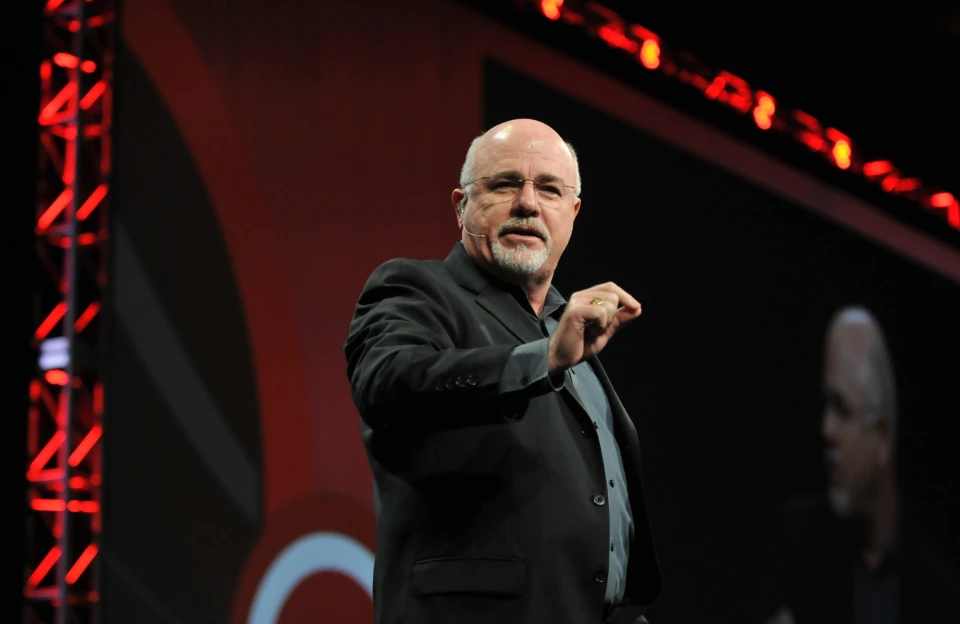
Speaking engagements. Ramsey commands significant fees for live appearances and events. His live shows sell out arenas.
Real estate. This is where things get interesting. Ramsey’s real estate holdings are estimated at $150 million by most sources, though he’s claimed publicly to own closer to $850 million in property, all purchased with cash, no mortgages. “Debt equals risk, and the borrower is a slave to the lender,” he told a podcast host. He’s lived this particular principle completely.
The interconnection matters. The radio show drives book sales. The books drive Financial Peace University enrollments. FPU enrollments drive long-term brand loyalty. Brand loyalty drives live event attendance. All of it supports the real estate portfolio, which provides a stable, debt-free asset base underneath the whole operation. He didn’t build a company; he built an ecosystem.
The 7 Money Rules He Actually Used
These aren’t just the principles he teaches to callers on the radio. These are the rules he rebuilt his own fortune around after 1988. The distinction is that he’s not a theorist. He’s someone who crashed, studied what went wrong, and applied a different framework to his own life before selling it to anyone else.
Rule 1: Live like you’re broke, even when you’re not. After bankruptcy, Ramsey didn’t upgrade his lifestyle the moment he started earning again. He lived well below his means for years, channeling every surplus dollar into eliminating debt and building cash reserves. The habits he developed in scarcity became permanent even when scarcity ended. I’ve tried a version of this myself, tracking every expense for a month and forcing myself to justify each one. It’s uncomfortable at first, then clarifying.
Rule 2: Pay off debt in the right order (the debt snowball). Ramsey’s signature method: list every debt, smallest to largest. Pay minimums on everything except the smallest throw, every extra dollar at that one until it’s gone, then roll that payment into the next one. The math isn’t perfect. Technically, you’d save more interest by attacking high-rate debt first. But the psychology is real. Eliminating a debt, seeing it drop to zero, generates momentum that keeps people going when willpower starts to fade.
Rule 3: Build a fully-funded emergency fund before you invest. His Baby Step 3 is three to six months of expenses in a completely liquid savings account before putting a dollar into the stock market. Most financial planners agree with the concept, if not always the amount. The idea is that without that buffer, any crisis forces you into debt, and debt is the enemy of every other financial goal.
Rule 4: Invest steadily in mutual funds. Ramsey’s investment advice is straightforward: 15% of your income into retirement accounts, primarily growth stock mutual funds. He’s been criticized for claiming 12% average annual returns, which some analysts consider optimistic. The broader principle of consistent, long-term investing in diversified funds is solid even if his specific return projections attract debate.
Rule 5: Never borrow what you can buy with cash. He owns his entire real estate portfolio without a single mortgage. His company owns its headquarters outright. No business loans, no credit lines, no debt of any kind. This is the most extreme version of his philosophy, and it’s also the slowest path he’s said that his real estate portfolio grew more slowly than it would have with leverage. He considers the risk elimination worth it.
Rule 6: Build income, not just savings. Ramsey didn’t get to $200 million by cutting expenses alone. He built products, a book, a course, and a radio show that generated income while he slept. The financial counseling that started in his church eventually became a publishing empire. The radio show that started in Nashville eventually reached 600 stations. The scale-up took time, but the structural decision to create things that earn without ongoing effort was essential.
Rule 7: Teach everything you know. This one is underrated. Ramsey’s entire business model is education. He gives away enormous amounts of information for free on the radio every day, real advice, to real people, with real problems, because that generosity builds an audience that trusts him enough to buy the books, take the courses, attend the events. The more value he gave away, the more valuable his brand became.
You May Like
How Jamie Dimon Reached the Top of Wall Street: Leadership Lessons Anyone Can Use
The Criticisms (They’re Worth Knowing)
Ramsey’s approach has real critics, and it’s worth being honest about this rather than pretending his methods are universally endorsed.
Economists have pushed back on his advice to avoid all debt, pointing out that borrowing strategically for education, a home, or a business can accelerate wealth building in ways that pure cash accumulation can’t. His no-credit-card stance is controversial because, used responsibly, cards offer rewards, fraud protection, and credit score benefits that he dismisses.
His investment return projections (12% annually) have been called unrealistic by financial planners who work with market averages closer to 7–8% after inflation.
His workplace policies have faced legal scrutiny, including discrimination allegations. Some of his pieces of advice have been criticized as too rigid to account for income inequality or emergency circumstances.
None of this erases the core insight of his story that someone who went broke at 28 built a $200 million empire through discipline and a clear philosophy. But context matters, and his methods work better for some situations than others. If you’re drowning in consumer debt, his framework is genuinely transformative. If you’re a sophisticated investor looking to optimize returns, you’ll find his advice too conservative.
What You Can Actually Take From His Story
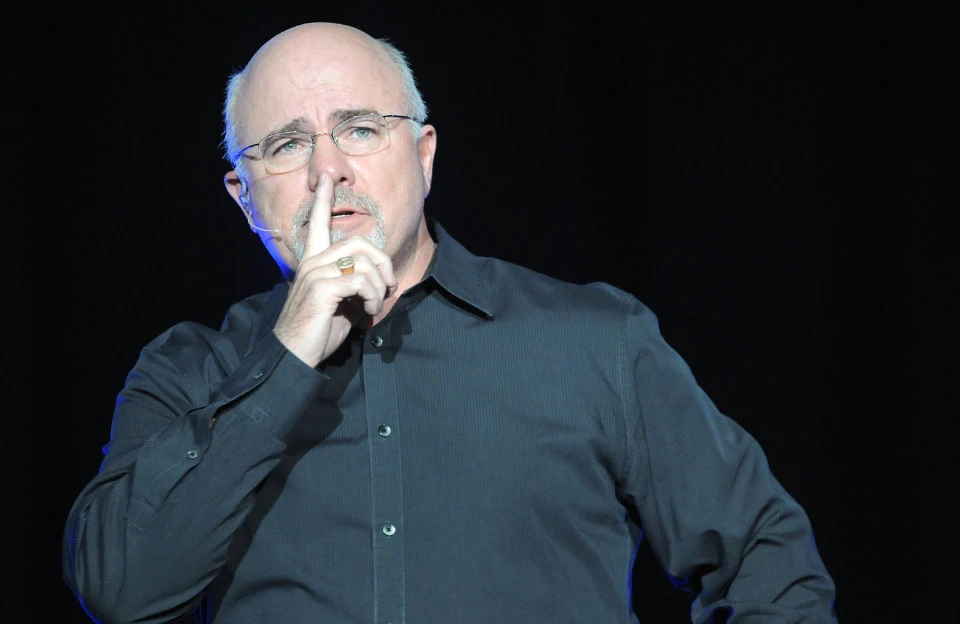
I’ve read Ramsey’s books. I’ve listened to hours of the radio show. I’ve tried pieces of his system, specifically the zero-based budget, where every dollar gets assigned a job before the month begins. It’s tedious at first. After about six weeks, it becomes automatic. The act of telling your money where to go before you spend it removes a surprising amount of financial anxiety.
The bigger lesson from his story isn’t any specific rule. It’s the demonstration that failure can be the foundation of credibility. Ramsey became the most trusted name in personal finance not despite his bankruptcy, but partly because of it. He knows what it feels like to lose everything. That’s not something you can fake, and audiences sense it.
He turned his worst moment into his most valuable asset, the authenticity of someone who’s been to the bottom and found a way back.
The Numbers at a Glance
| Estimated net worth (2026) | ~$200 million |
| Ramsey Solutions annual revenue | ~$300 million |
| Weekly radio listeners | 20+ million |
| Radio stations | 600+ |
| Real estate holdings (est.) | $150M–$850M (all cash, no debt) |
| Filed bankruptcy | 1988 (age 28) |
| First book published | 1992 (Financial Peace) |
| Ramsey Solutions founded | 1991 |
| Instagram followers (2026) | 6.4 million |
The most striking thing about Dave Ramsey’s story isn’t the $200 million. It’s the fact that the same principles he teaches on the radio every day are the exact principles he used to rebuild his own life after losing everything at 28. That’s not marketing. That’s credibility, and it’s the hardest kind to manufacture.

I’m Shaheen, the writer behind every article on FahadsGuide. I research and write practical guides on budgeting smarter, setting up better living spaces, using AI tools effectively, and building daily habits that actually stick. Background in motivational content on YouTube.Every article is researched and written to be genuinely useful, not just readable.