

Is $500 a realistic first goal for selling digital products on Etsy? Yes, but treat it as a genuine milestone, not a baseline. The median Etsy seller earns under $500 total per year, so reaching $500 actually puts you ahead of most shops on the platform. Realistically, it takes a focused product, honest pricing, and somewhere between a few weeks and a few months of consistent listing and iterating, not a viral moment or a lucky algorithm break. This guide walks through the exact steps and the real math behind them, so you know what “realistic” actually looks like in sales volume.
Step 1: Pick a Proven Digital Product Category
Start with a category that already has proven buyer demand instead of guessing what might sell.
- Digital downloads are Etsy’s fastest-growing category, up an estimated 25% year over year, and now make up roughly 15 to 20% of all Etsy listings, up from under 5% in 2020, according to Anlyzo’s 2026 Etsy Seller Statistics.
- The strongest-selling digital categories right now are:
- Wedding stationery (invitations, save the dates, signage)
- Business templates (Canva, Notion, Google Sheets)
- Printable wall art
- Planners and trackers
- SVG cut files
- SideQuestHustle’s 2026 Etsy digital products guide identifies these categories as the ones with consistent, repeatable buyer demand rather than one-off trends.
- Pick one category to start, not five. New sellers often spread thin across product types before any single line gets traction, which slows down the feedback loop you actually need in the early weeks.
- If you’re weighing “what can I sell on Etsy with no experience,” these categories are a good starting point precisely because they don’t require advanced design skills, just a clear layout and attention to what buyers already search for.

Step 2: Validate Demand Before You Build Anything
Confirm people are already buying something similar before you spend hours designing a product nobody wants.
- Search your product idea directly on Etsy and sort results by “best seller.”
- Open 5 to 10 competing listings and note their price points, review counts, and how recently they sold.
- Check listing tags through Etsy’s search bar autocomplete, since these reveal what buyers actually type into the search box.
- Look for a gap: a popular sub-niche with strong demand but thin or outdated competition.
- Skip categories where every top listing already has thousands of sales and near-identical designs, since that usually signals saturation rather than opportunity.
A mistake new sellers make is designing the product first and checking demand second. Spending 20 minutes validating tonight can save hours of wasted design work later, and it’s a habit worth carrying into every future product you launch.
Step 3: Create Your First Product
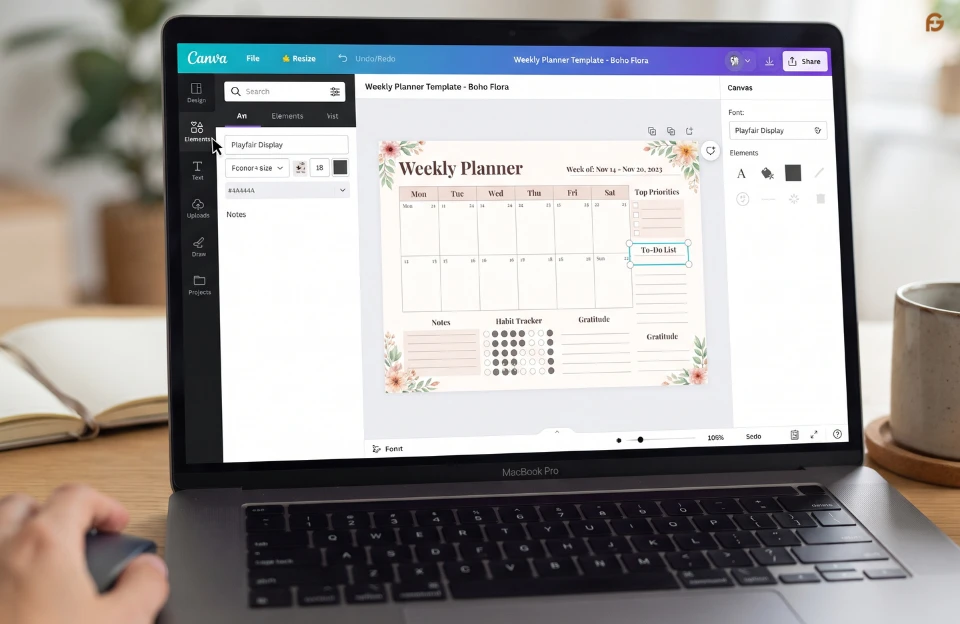
Build one polished product rather than ten mediocre ones spread across different niches.
- Tools that work well for beginners:
- Canva (the free tier covers most templates, planners, and printables)
- Google Sheets or Notion for template-based digital products
- Adobe Illustrator or the free Inkscape for SVG cut files
- Time investment to expect:
- Simple printables: 1 to 3 hours
- Multi-page planners or template bundles: 4 to 10 hours
- Editable Canva templates with instructions: 3 to 6 hours
- Steps to create it:
- Sketch the layout or structure before opening any design tool.
- Build the first version with a focus on function over polish.
- Test it yourself: print it, fill it in, or use it the way a real buyer would.
- Export in the file formats buyers expect, such as PDF, PNG, SVG, or an editable Canva link.
- Write simple, clear usage instructions to include with the download.
- Digital products carry 70 to 90% profit margins, compared to 20 to 40% for handmade physical goods, which is the single biggest reason digital is the recommended starting category for a first $500, according to SideQuestHustle’s “What Etsy Sellers Actually Make in 2026.”
Step 4: Set Up Your Etsy Shop and Price for Profit
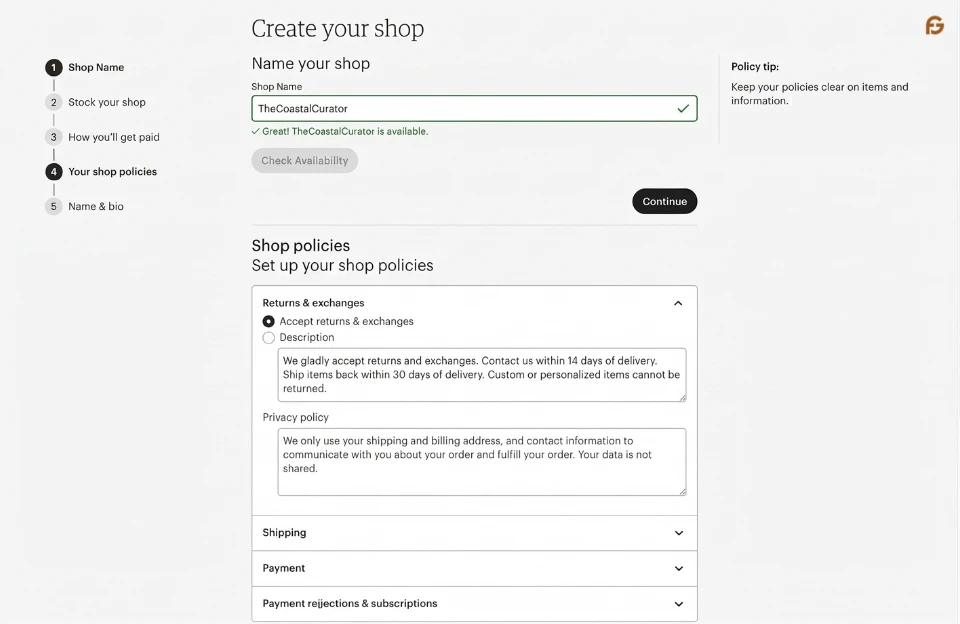
Open your shop and build Etsy’s fee structure into your pricing from day one, not as an afterthought once your first sale nets less than expected.
Etsy charges no monthly fee to open a shop. Your only upfront cost is the $0.20 listing fee per item, which renews every 4 months, per Etsy’s Seller Handbook. Beyond that, the fees to plan around are:
- Listing fee: $0.20 per item, renewing every 4 months
- Transaction fee: 6.5% of the sale price
- Payment processing: roughly 3% plus $0.25 per order (U.S. rates)
- Offsite Ads fee: 12-15%, automatically applied once a shop crosses $10,000 in trailing annual sales. It won’t apply to your first $500, but it’s worth knowing what happens after you scale past that point.
Combined, the effective fee load on a typical digital sale, before Offsite Ads kick in, is roughly 11.3%. A $25 digital download nets the seller about $22.17 after fees, per Anlyzo’s 2026 Etsy fee breakdown.
Pricing guidance: popular digital listings price between $8 and $35, and many successful sellers build consistent income around one core product priced in the $29 to $49 range rather than chasing viral traffic, according to Dylan Jahraus’s 2026 Etsy digital product trend analysis.
Do you need a business license to sell on Etsy? In most places, no. You can start as an individual seller and formalize later if your income grows, though local rules vary, so check your city or state’s requirements once you’re selling consistently.
Step 5: Write SEO-Optimized Titles, Tags, and Descriptions
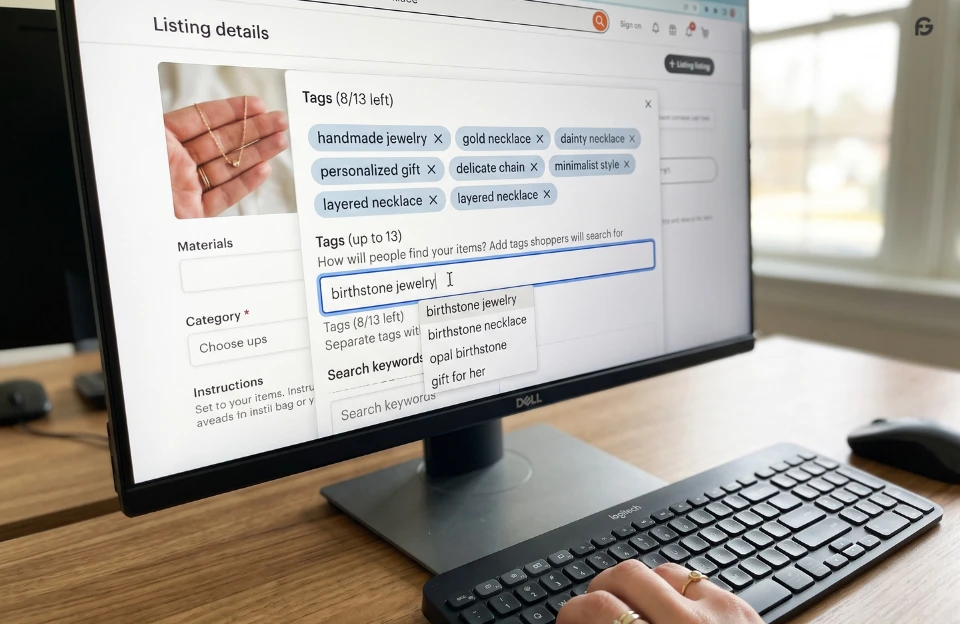
Make your listing findable by matching how real buyers search, not how you’d describe the product to a friend.
- Front-load your title with the exact phrase buyers search for, for example, “Wedding Welcome Sign Template, Editable Canva.”
- Use all 13 available tags. Each one is a separate search opportunity, so avoid repeating the same phrase across multiple tags.
- Pull tag ideas from Etsy’s autocomplete and from the competitor research you did in Step 2.
- Write the first two lines of your description as a plain language summary, since this is often what shows up in search previews.
- Include practical buyer details: file formats included, dimensions, whether it’s editable, and how to access the download after purchase.
This step matters as much as the question of how to start selling digital downloads on Etsy as the product itself does. A well-made product with a weak listing simply won’t get found.
Step 6: Launch, Get Your First Reviews, and Iterate
Treat your first few weeks as a feedback loop, not a finished launch you can walk away from.
- Share your new listing with any existing personal network, such as social media or relevant online communities, without being spammy about it.
- Respond to every buyer message quickly, since response time affects Etsy’s internal ranking signals.
- After your first sale, follow up through Etsy’s messaging (not pushy) to encourage an honest review.
- Watch which listing photos and titles get clicks versus which actually convert to sales, and adjust the weaker one.
- A mistake new sellers make is pricing too low out of fear of not selling. Underpricing often signals low quality rather than good value to buyers, and it also means you need far more individual sales to reach $500.
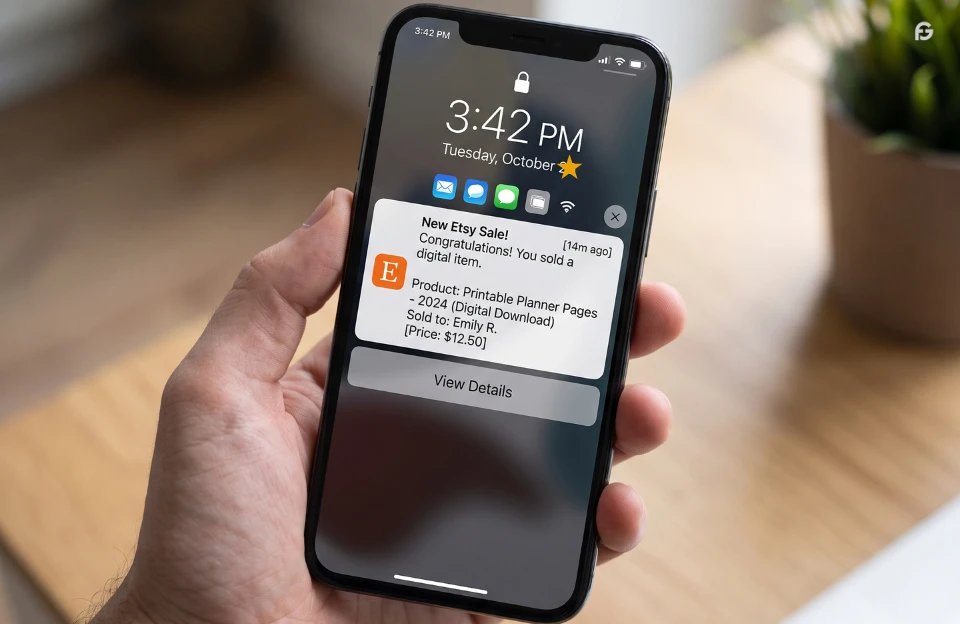
Step 7: Do the Math, How Many Sales Get You to $500
Here’s what the path to $500 actually looks like in sales volume, not vibes or wishful thinking.
- At a $10 average price point with roughly 11% combined fees, you’d need about 56 sales to net $500.
- At a $25 average price point, that drops to roughly 22 to 23 sales.
- For context, new Etsy shops average around 94 monthly sales across all products by their first year, per Customcy’s 2026 Etsy seller earnings analysis. So needing 22 to 56 total sales from one focused product line is a realistic, non hype target, not a stretch goal.
- Higher price points reach $500 faster in sales count, but only if demand actually supports that price. This is exactly why Step 2’s validation work matters more than the price you’d simply prefer to charge.
YOU MAY LIKE
7 Side Hustles You Can Start Tonight With No Startup Money
8 Realistic Ways to Make Extra Money From Home
Is Selling Digital Products on Etsy Worth It in 2026?
For a first $500, yes, largely because of the underlying economics rather than any hype cycle. Digital products have no shipping cost, no inventory to store, and near-zero marginal cost per additional sale, unlike handmade physical goods, where every sale consumes materials and time. Combined with digital’s 70 to 90% margin range, that makes it the most realistic starting category for a beginner’s first meaningful Etsy income, and it’s a big part of why so many creators ask specifically about digital products rather than handmade goods when getting started.
How Much Does It Cost to Start an Etsy Shop?
Startup cost is genuinely low. Opening a shop is free, and your only guaranteed cost before a sale happens is the $0.20 listing fee per item. Everything else (transaction fees, payment processing) only applies once you actually make money, which makes digital products one of the lowest-risk ways to test a creative side hustle.
Path to $500: The Numbers
| Price Point | Etsy Fees (approx., ~11.3%) | Net per Sale | Sales Needed for $500 |
| $10 | ~$1.13 | ~$8.87 | ~56 sales |
| $15 | ~$1.70 | ~$13.30 | ~38 sales |
| $25 | ~$2.83 | ~$22.17 | ~22 to 23 sales |
| $35 | ~$3.96 | ~$31.04 | ~16 sales |
Fee estimates are based on Anlyzo’s 2026 Etsy fee breakdown. Actual fees vary slightly by payment processor and order size.
Frequently Asked Questions
How much does it cost to start selling digital products on Etsy?
Very little. There’s no monthly shop fee, just a $0.20 listing fee per item (renewing every 4 months) plus per sale transaction and payment processing fees once you actually make a sale.
How long does it take to make your first $500?
It varies, but based on realistic sales volume, roughly 22 to 56 sales depending on price point, most focused sellers who list consistently and validate demand first can reach it within a few weeks to a few months.
Do digital products actually sell on Etsy?
Yes. Digital downloads are Etsy’s fastest-growing category, now making up an estimated 15 to 20% of all listings, up from under 5% in 2020, per Skillademia’s 2026 Etsy Statistics.
What’s the best digital product for beginners?
Printables, planners, and Canva editable templates tend to be the easiest entry points, since they require no advanced design software and match categories with proven, repeatable demand.
Do I need to pay taxes on Etsy income?
Yes. Etsy income is generally taxable as self-employment or business income. Keep records of sales and fees from day one and consult a tax professional once you’re earning consistently.
Is Etsy still worth it in 2026?
For digital products specifically, yes. The combination of near-zero marginal cost per sale and 70 to 90% margins makes it one of the more realistic low-effort income categories, even though the median seller still earns modestly.
Key Takeaways
- The median Etsy seller earns under $500 per year, so hitting $500 is a genuine milestone. Set expectations honestly from day one.
- Digital products keep 70 to 90% profit margins on Etsy, versus 20 to 40% for handmade goods, which is why they’re the smartest starting category.
- Etsy’s combined fee load on a typical digital sale is roughly 11.3%. A $25 download nets about $22.17 after fees.
- At a $25 price point, it takes roughly 22 to 23 sales to reach $500; at $10, it takes about 56 sales.
- New Etsy shops average around 94 monthly sales by their first year, so 22 to 56 sales from one focused product is a realistic target, not a stretch.

I’m Shaheen, the writer behind every article on FahadsGuide. I research and write practical guides on budgeting smarter, setting up better living spaces, using AI tools effectively, and building daily habits that actually stick. Background in motivational content on YouTube.Every article is researched and written to be genuinely useful, not just readable.