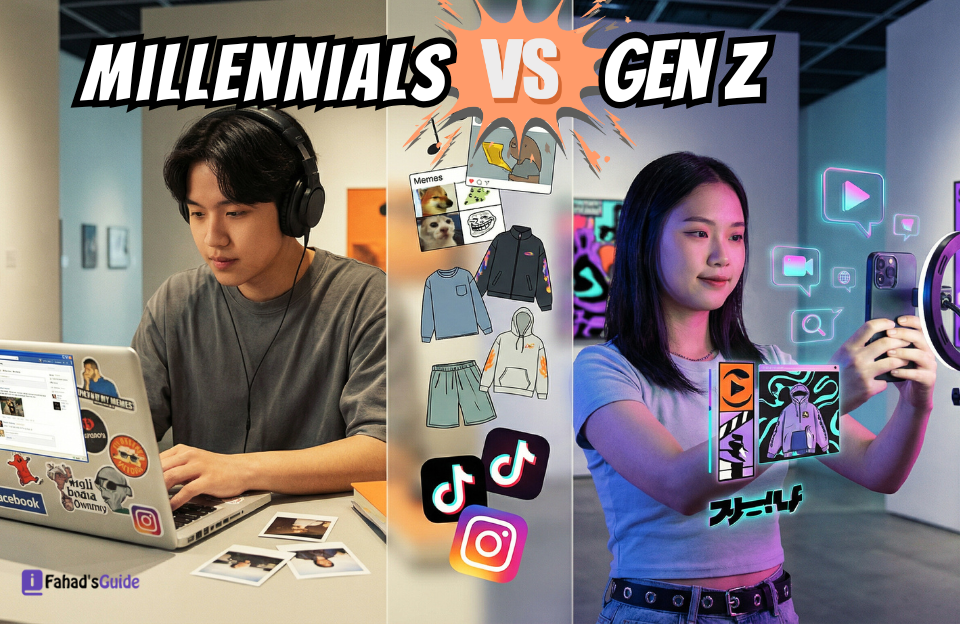
The Gen Z vs Millennial pop culture divide has become one of the most talked-about generational discussions online. From music and memes to fashion, humor, and social media habits, the two generations consume and shape culture in noticeably different ways. While Millennials grew up during the rise of the internet, Gen Z was born into a fully digital world. That difference continues to shape how each generation experiences pop culture today.
Different Digital Upbringings Shape Culture
Millennials witnessed the transition from offline to online life. They remember using CDs, watching TV schedules, and discovering trends through blogs, early social media platforms, and cable television. Platforms like Facebook, Twitter, and YouTube defined their early digital culture.
Gen Z, however, has always lived in a mobile-first, always-online world. TikTok, Instagram, Snapchat, and streaming platforms are central to how Gen Z consumes pop culture. As a result, trends move faster, attention spans are shorter, and cultural moments are often driven by viral content rather than long-term fandoms.
Music Culture: Albums vs Viral Hits
Music highlights the generational divide clearly. Millennials often associate music with albums, long playlists, and emotional nostalgia. Songs are tied to life moments, memories, and specific time periods.
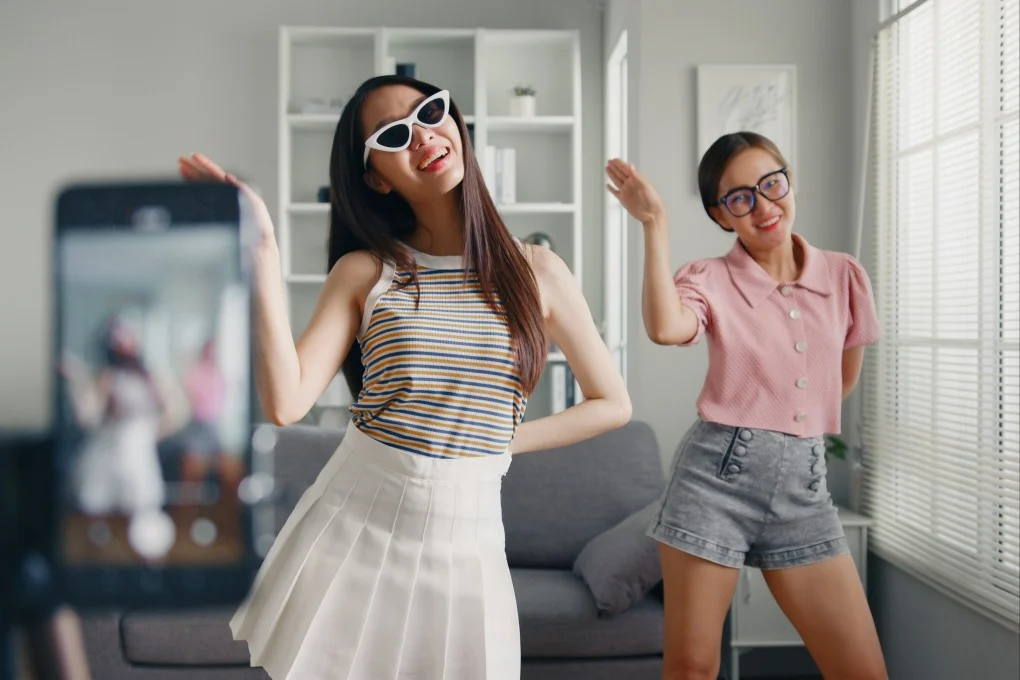
Gen Z’s music culture is more trend-driven. Songs often become popular through short clips on social media, especially TikTok. A single viral moment can turn an unknown track into a global hit overnight. Genres blend freely, and loyalty to a single artist or style is less common than in previous generations.
Humor and Meme Culture Differences
Millennial humor is usually built around relatability and irony. Memes often focus on adulthood struggles, work life, or shared generational experiences.
Gen Z humor is faster, more abstract, and intentionally chaotic. Many Gen Z memes rely on absurdity, irony layered over irony, or jokes that make sense only within a specific online context. This difference often causes confusion between generations, but it also shows how internet culture continues to evolve.
Fashion and Aesthetic Shifts
Fashion trends clearly reflect the Gen Z vs Millennial culture gap. Millennials popularized clean aesthetics, minimalism, and carefully curated social media feeds. Neutral colors and “timeless” styles were central to their fashion identity.
Gen Z has largely rejected this approach. Their fashion embraces bold colors, thrifted clothing, Y2K influences, and gender-fluid styles. Instead of perfection, Gen Z values authenticity, experimentation, and self-expression.
Fame, Influencers, and Authenticity
Millennials grew up admiring traditional celebrities from movies, music, and television. Fame felt exclusive and distant.
Gen Z views fame differently. With social media allowing anyone to go viral, influencers feel more accessible and replaceable. Authenticity matters more than polish, and creators who appear overly commercial often lose relevance quickly.

More Evolution Than Conflict
Despite the contrasts, the Gen Z vs Millennial pop culture divide is less about conflict and more about cultural evolution. Millennials frequently adopt Gen Z platforms, while Gen Z continues to rediscover and remix Millennial-era music, fashion, and trends.
Pop culture reflects the world people grow up in. As technology and media continue to change, generational differences will always exist — not as a competition, but as a reflection of how culture adapts over time.