
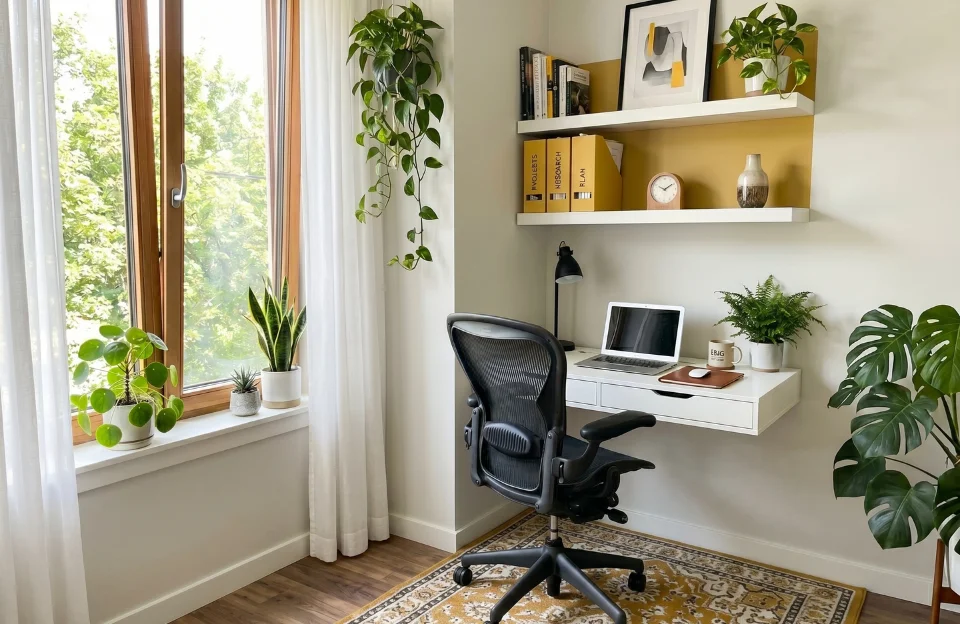
The rise of remote work has transformed home offices from luxury additions to essential spaces where millions of professionals spend significant portions of their days. For those working in small homes, apartments, or limited spaces, creating a functional, stylish home office presents unique challenges that require creative solutions and strategic design choices.
A small home office doesn’t mean sacrificing productivity, comfort, or aesthetics. With thoughtful planning and smart furniture selections, even the tiniest corner can become a professional workspace where you do your best work while maintaining the style and comfort your home deserves.
This comprehensive guide explores 12 proven small home office ideas that combine functionality with beautiful design. These aren’t theoretical concepts from design magazines but practical, tested strategies that work in real small spaces, from studio apartment corners to guest bedroom offices to under-stair niches transformed into workspaces.
Let’s discover how to build the perfect small home office.
1. Choose a Compact Desk That Fits Your Space
The desk is the foundation of any home office, and choosing the right one for a small space is critical to both functionality and aesthetics.
Compact Desk Options
Wall-mounted desks that fold down when not in use provide full work surfaces without permanently consuming floor space, perfect for studios or multipurpose rooms.
Floating desks mounted directly to walls create a streamlined look while maintaining ample knee space underneath, providing workspace without bulky legs.
Corner desks maximize awkward angles by fitting snugly into corners, providing L-shaped work surfaces in the footprint of a single standard desk.
Narrow desks in 24-30 inch depths work beautifully in small spaces while still accommodating monitors, keyboards, and essential work items.
Nesting tables or expandable surfaces grow when you need more workspace for projects, but shrink back to minimal footprints for daily work.
Compact standing desks provide ergonomic benefits while taking up surprisingly little floor space, with some folding completely flat when not in use.
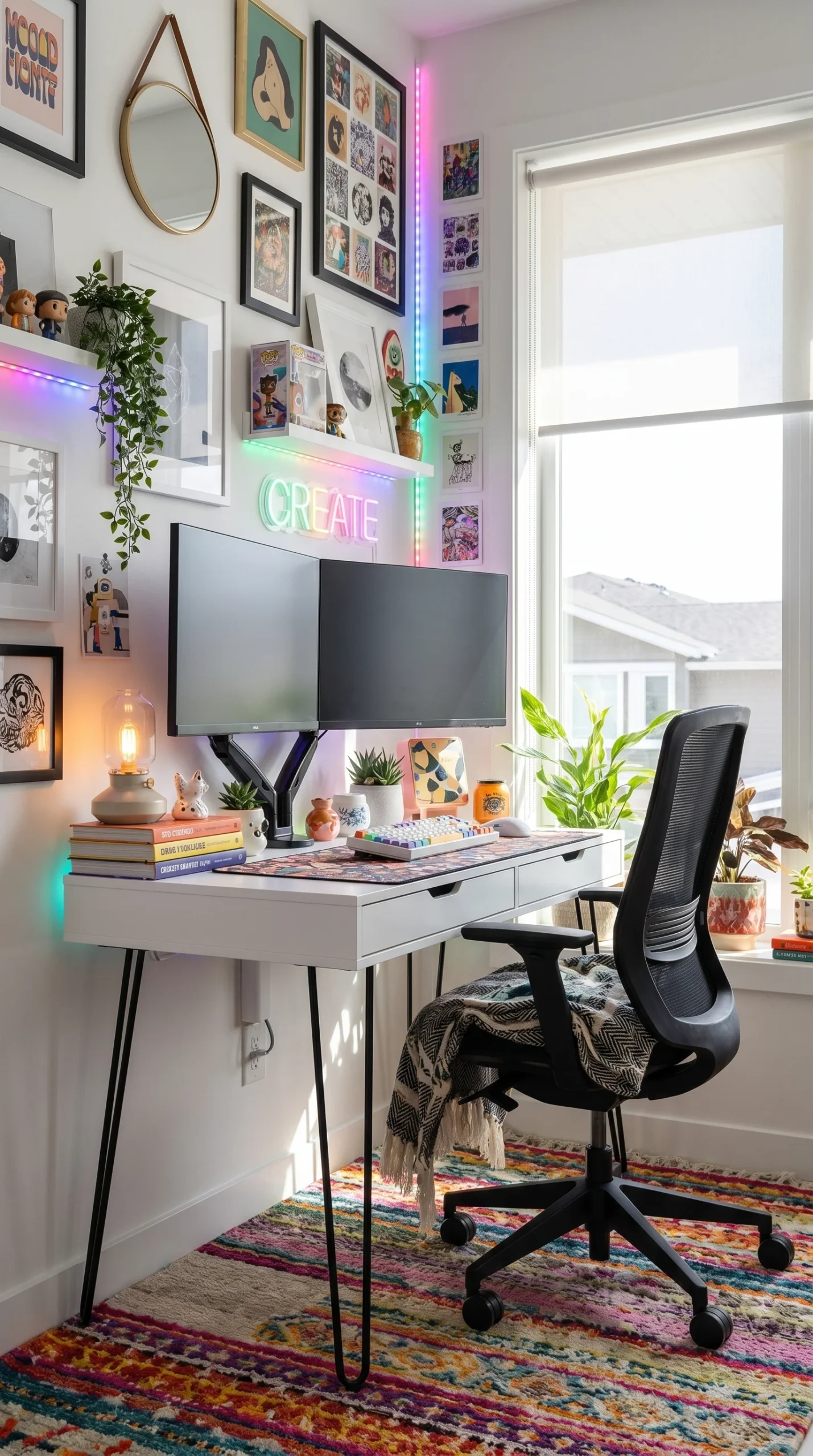
Desk Material Selection
Light-colored wood or white finishes make desks feel less heavy in small spaces, maintaining visual lightness despite the furniture’s importance.
Glass or acrylic tops create the illusion of open space by allowing light to pass through, making desks feel less imposing.
Metal frames with minimal ornamentation emphasize clean lines that suit modern small spaces better than heavily carved traditional desks.
Solid construction matters more than style; your desk bears weight and receives daily use, so durability trumps trendy finishes.
Desk Placement Strategy
Position desks facing doors or walls rather than having your back to the room, creating a sense of control and reducing distraction.
Avoid blocking windows if possible, allowing natural light to reach your work surface while maintaining views that reduce mental fatigue.
Maintain clear floor space around and in front of your desk so the office doesn’t feel claustrophobic despite its small size.
Consider natural light when positioning desks, placing them where morning or afternoon light reaches without creating glare on screens.
If you’d like to recreate this look, consider a wall-mounted fold-down desk. It’s one of the most space-efficient solutions available and works beautifully in studios or multipurpose rooms.
Recommended Product: Wall-Mounted Folding Table
Why It Works: A fold-down wall desk disappears completely when your workday ends, letting your space transition back to a living room, bedroom, or dining area without a desk dominating the room. Look for one with a built-in shelf or pegboard panel for added storage.
2. Embrace Vertical Storage Solutions
When floor space is precious, vertical storage transforms your home office from cluttered to organized by using walls that would otherwise go unused.
Vertical Storage Options
Floating shelves at various heights display decorative items while storing books, files, and office supplies in organized, accessible arrangements.
Wall-mounted file organizers keep documents off your desk and within arm’s reach, maintaining clean work surfaces while organizing important papers.
Pegboard systems with adjustable hooks provide flexible storage that adapts as your needs change, holding everything from office supplies to headphones.
Over-the-desk shelving installed above your workspace provides storage directly above where you work, maximizing vertical space above your most important furniture.
Tall narrow bookcases in the corner or along walls create impressive storage in minimal floor footprints, accommodating numerous books and supplies.
Wall-mounted cabinets with doors conceal clutter while keeping frequently needed items accessible, providing hidden storage that maintains clean aesthetics.
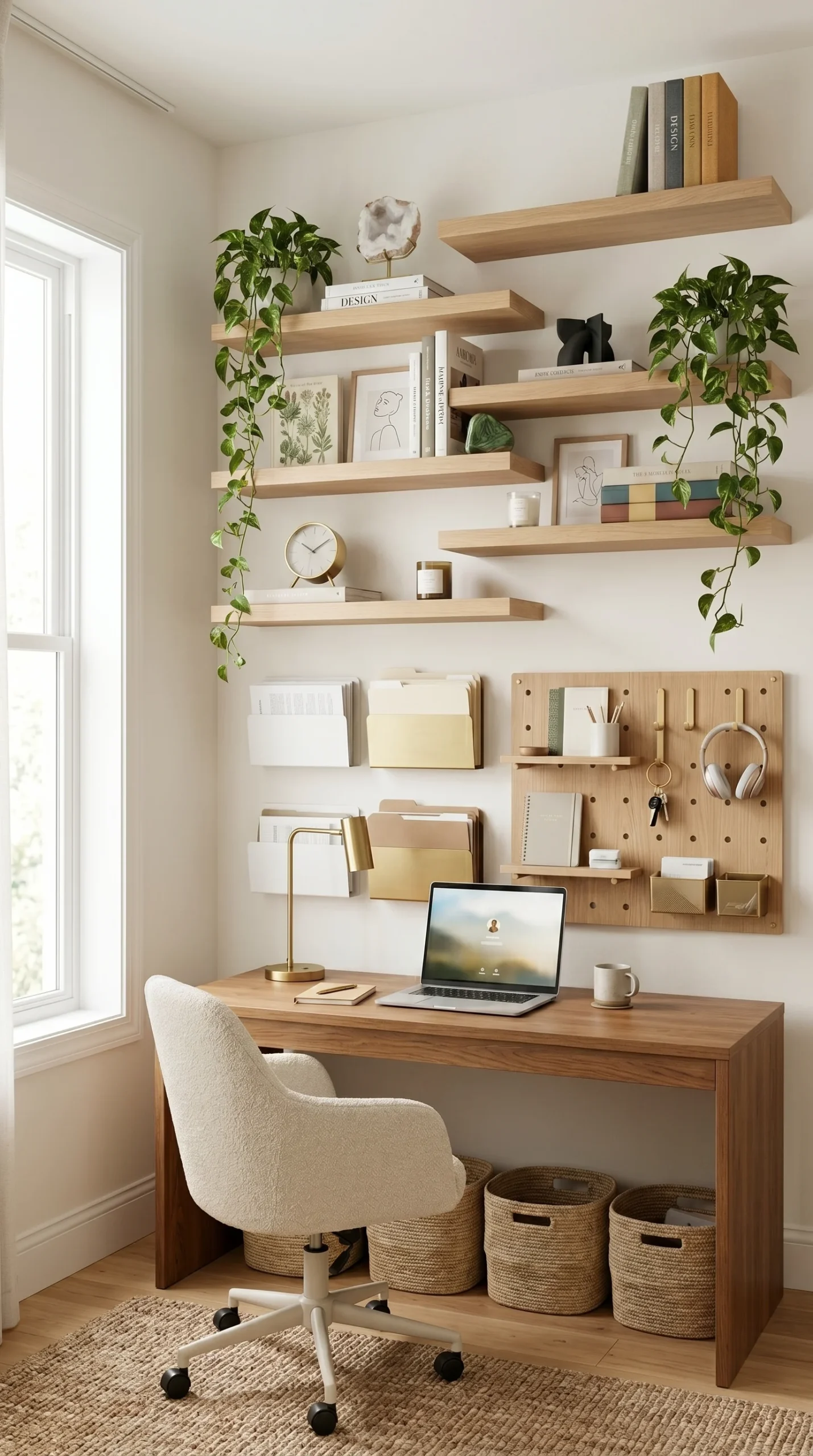
Organizing Vertical Storage
Group by category with files in one area, office supplies in another, and decorative items on separate shelves for easy location finding.
Use matching containers for cohesive appearances that make storage feel intentional rather than haphazard collections.
Label everything with clear categories so you and anyone else can find items quickly, essential in small spaces where organization is critical.
Keep most-used items at arm level in the most accessible locations, reserving higher and lower spaces for less frequently needed items.
One approach that works especially well here is a pegboard wall organizer. The ability to rearrange hooks and shelves as your needs change makes it far more versatile than fixed shelving.
Recommended Product: Peg Board Kit
Why It Works: A pegboard kit with assorted hooks, shelves, and bins keeps your desk completely clear while putting everything within arm’s reach. Choose one in white or black to coordinate with most office color schemes.
3. Install Proper Lighting for Focus and Comfort
Lighting is crucial in any home office, but especially in small spaces where poor illumination makes areas feel even more cramped and creates eye strain during long work sessions.
Essential Office Lighting
Desk lamps with adjustable arms position light exactly where you need it without occupying additional desk space when properly mounted or wall-mounted.
Overhead lights or recessed ceiling fixtures provide general illumination without the visual bulk of hanging fixtures in small spaces.
Natural light from windows reduces mental fatigue and eye strain, though glare on screens requires strategic positioning or light-filtering treatments.
Accent lighting, like LED strips under shelves or behind desks, adds ambiance while improving visibility and making small spaces feel more designed.
Task lighting focused on work areas ensures adequate light for detailed work without needing overly bright general illumination that costs more and consumes more energy.
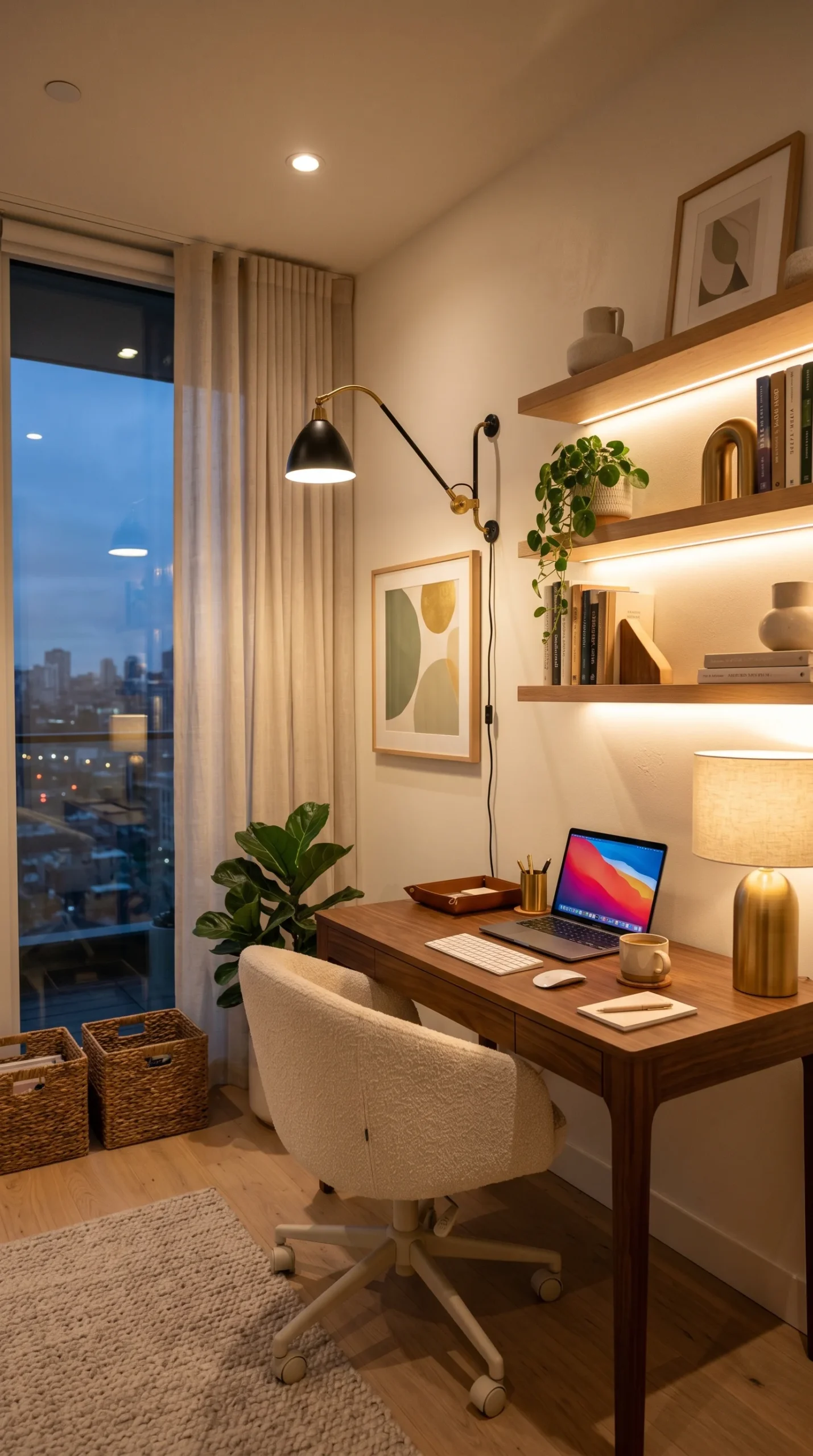
Lighting Color Temperature
Warm white (2700-3000K) creates inviting, comfortable atmospheres perfect for offices where you’ll spend extended periods.
Cool white (4000-5000K) enhances focus and alertness, beneficial for detailed work but potentially fatiguing over long durations.
Daylight (5000-6500K) closely mimics natural light, ideal near windows or for seasonal affective disorder concerns.
Positioning for Small Spaces
Mount lamps to walls rather than desks to preserve precious work surface, using adjustable swing-arm fixtures that position light exactly where needed.
Avoid shadows on your work surface by positioning overhead lights slightly ahead of where you sit rather than directly above.
Reduce glare on screens through proper lamp positioning, screen angles, and potentially anti-glare protective filters.
For an easy upgrade, a swing-arm wall-mounted lamp is one of the best investments you can make in a small home office: it delivers focused task lighting without sacrificing a single inch of desk space.
Recommended Product: swing-arm wall-mounted lamp
Why It Works: A wall-mounted adjustable arm lamp keeps your desk surface completely open while putting light exactly where you need it. Many options include a USB charging port on the base, adding extra function in a compact package.
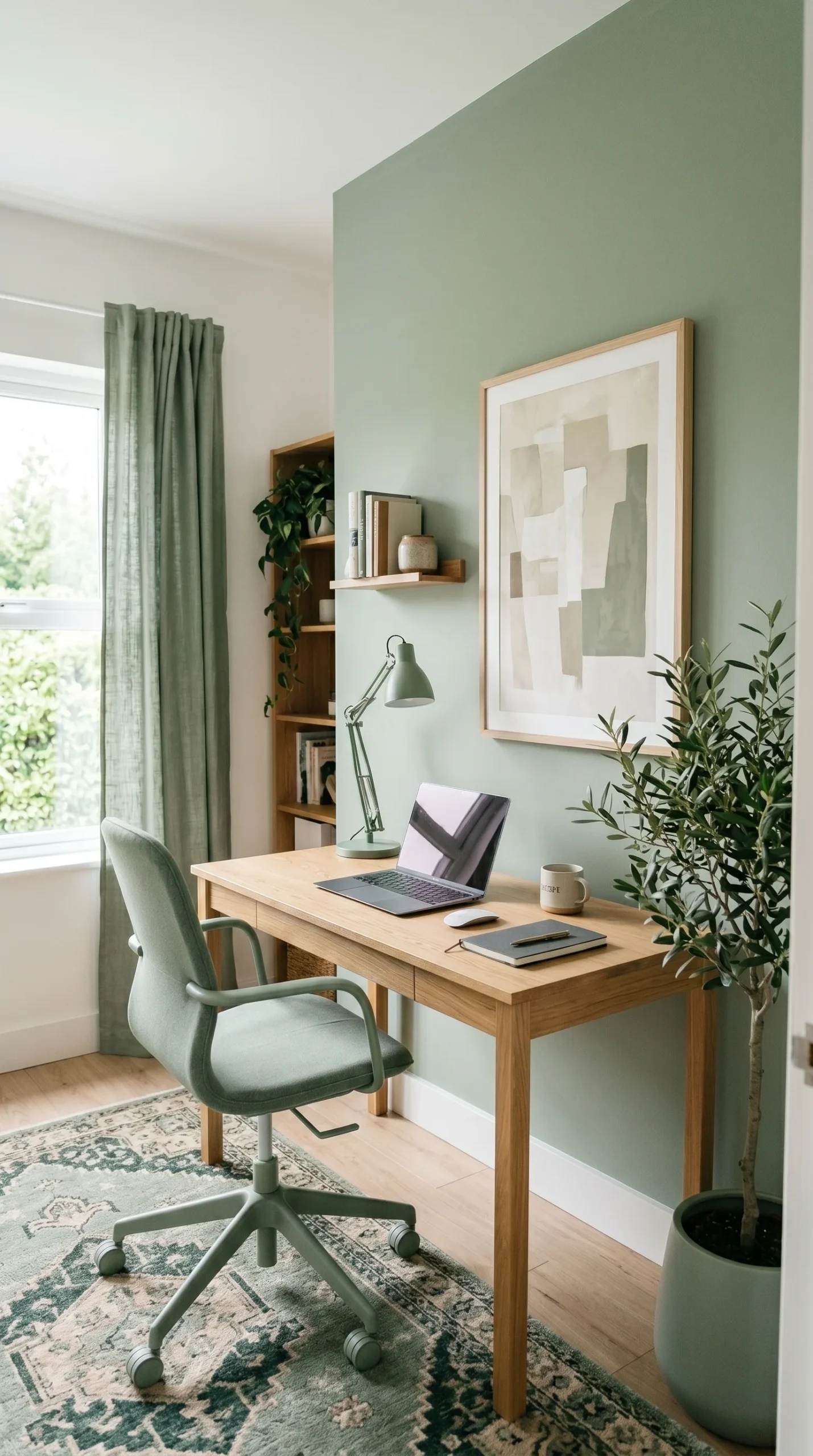
4. Use Color Psychology to Enhance Productivity
Color choices profoundly impact your home office environment, affecting concentration, mood, and the perception of space size.
Productivity Colors
Blue promotes focus and calm concentration, making it ideal for creative and analytical work without the coolness that can feel uninviting.
Green creates balance and reduces eye strain while promoting creativity and growth, perfect for nature-connected spaces that inspire.
Gray provides neutral professional backdrops that allow decorative elements to stand out while maintaining sophisticated aesthetics.
Soft yellows and warm neutrals create inviting spaces that don’t feel clinical or institutional, encouraging people to want to work there.
White maximizes perceived space and light reflection, perfect for small offices that benefit from visual expansion.
Color Application Strategies
Paint a single accent wall in a color that inspires you rather than committing the entire room to a bold hue.
Keep wall colors neutral and introduce personality through furniture, artwork, and accessories that can be changed easily.
Avoid dark colors in small spaces as they absorb light and create enclosed feelings despite the professional appearance they might suggest.
Consider your lighting when choosing colors, as different bulb colors render paint differently and affect the final appearance.
Balancing Professional with Personal
Choose colors you genuinely love since you’ll spend significant time in this space, prioritizing personal preference over generic professional advice.
Test color samples on your walls in various lighting conditions before committing to painting large swatches to see how colors appear throughout the day.
Layer neutrals with personality through décor choices to create professional aesthetics with personal warmth.
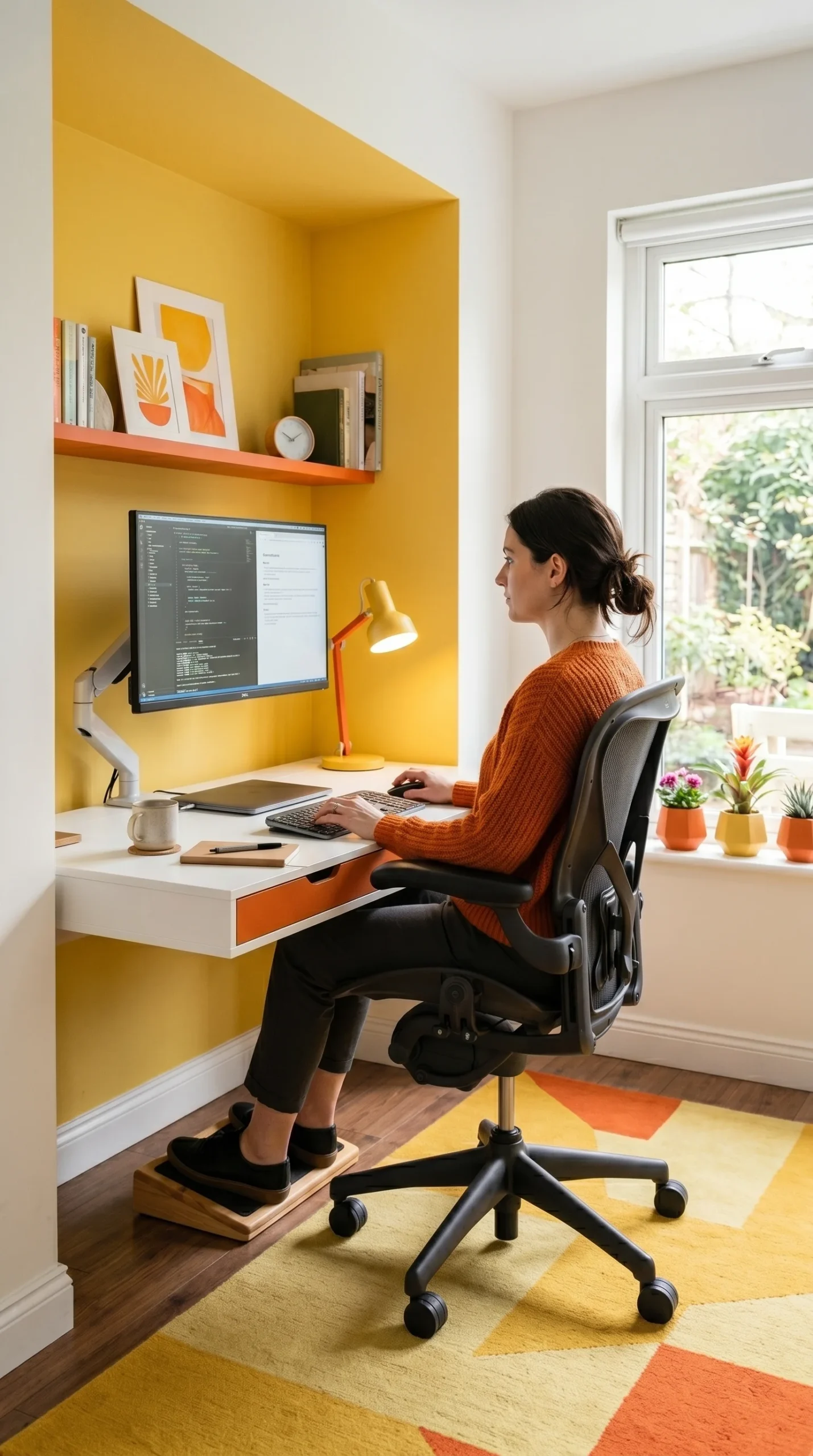
5. Select an Ergonomic Chair for Comfort and Health
Your office chair is the most important furniture investment for long-term health and productivity, especially in small spaces where you can’t move around much.
Ergonomic Chair Essentials
Lumbar support maintains natural spine curvature, preventing back pain from extended sitting in incorrect positions.
Adjustable height ensures your feet rest flat on the floor and elbows align at 90 degrees, reducing strain on arms and shoulders.
Seat depth of 16-18 inches accommodates various body sizes comfortably without forcing poor posture.
Armrests at the correct height support arms while working, reducing neck and shoulder tension from unsupported reach.
The swivel base allows reaching different areas of your desk and the surrounding workspace without twisting your spine.
Compact Chair Options for Small Spaces
Slim-profile chairs with minimalist designs reduce visual bulk while providing essential ergonomic support.
Wingback or barrel-shaped chairs offer comfortable seating in compact footprints, adding style while maintaining functionality.
Adjustable mesh chairs with light materials feel less heavy in small spaces while providing breathable comfort during long work sessions.
Folding office chairs collapse flat for storage when not in use, perfect for multipurpose spaces that serve as offices only part-time.
Chair Placement
Position chairs where they don’t block movement through your office, maintaining clear pathways even in tiny spaces.
Allow space behind chairs for comfortable sitting and reclining without the chair backing into walls.
Consider visibility from other areas of your home, placing chairs where unsightly mechanisms and undersides aren’t prominently visible.
This is genuinely the one area worth spending more on. To achieve both comfort and a clean aesthetic in a small space, a mesh ergonomic chair with a slim profile checks every box, supportive enough for long sessions, light enough visually that it doesn’t dominate the room.
Recommended Product: Mesh Ergonomic Chair
Why It Works: A well-designed mesh ergonomic chair provides lumbar support, breathability, and adjustability without the heavy, bulky look of traditional executive chairs. The open mesh design keeps the visual footprint light, which matters a lot in smaller offices.
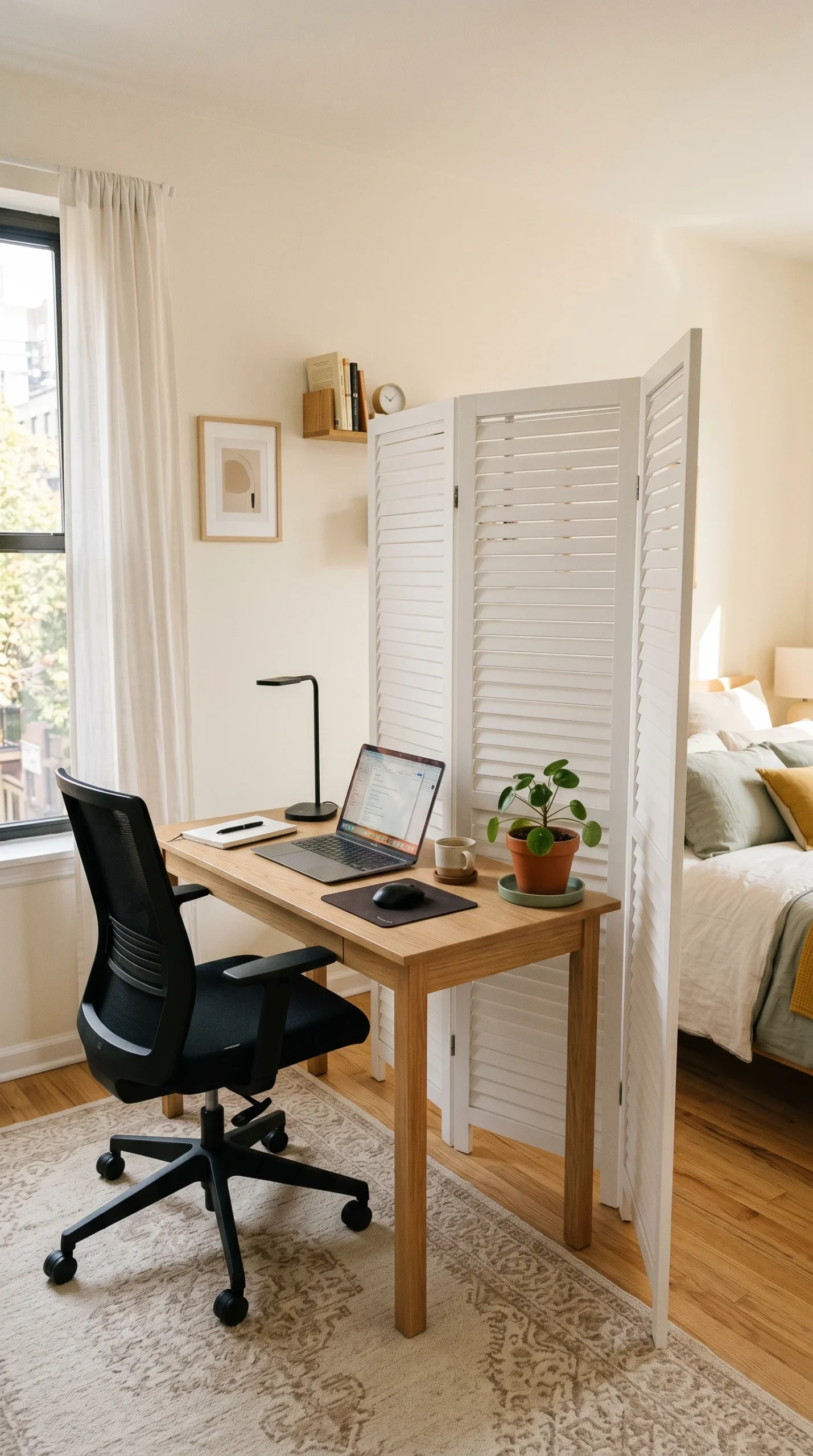
6. Create Visual Boundaries in Open Spaces
When your home office shares space with your bedroom or living area, visual and psychological boundaries help you maintain focus while keeping work separate from relaxation.
Boundary Creation Strategies
Room dividers or folding screens create physical separation without permanent walls, perfect for renters or those wanting flexibility.
Curtains or fabric panels hung from ceiling tracks define spaces while maintaining the ability to close off the office when not in use.
Tall bookcases or shelving units act as walls, storing office supplies while creating psychological boundaries between work and living areas.
Area rugs define office zones visually, signaling to your brain where work begins and personal space ends.
Strategic furniture placement with desks positioned to face away from living areas creates natural separation and improves focus.
Psychological Benefits
Visual separation helps you mentally transition into work mode and physically step away from the office when done.
Reducing distractions from family activities or entertainment systems improves focus and minimizes interruptions.
Professional appearance for video calls improves when you can angle cameras to show only your office, not your bedroom or living room.
Noise reduction from physical barriers helps maintain focus despite household activities occurring nearby.
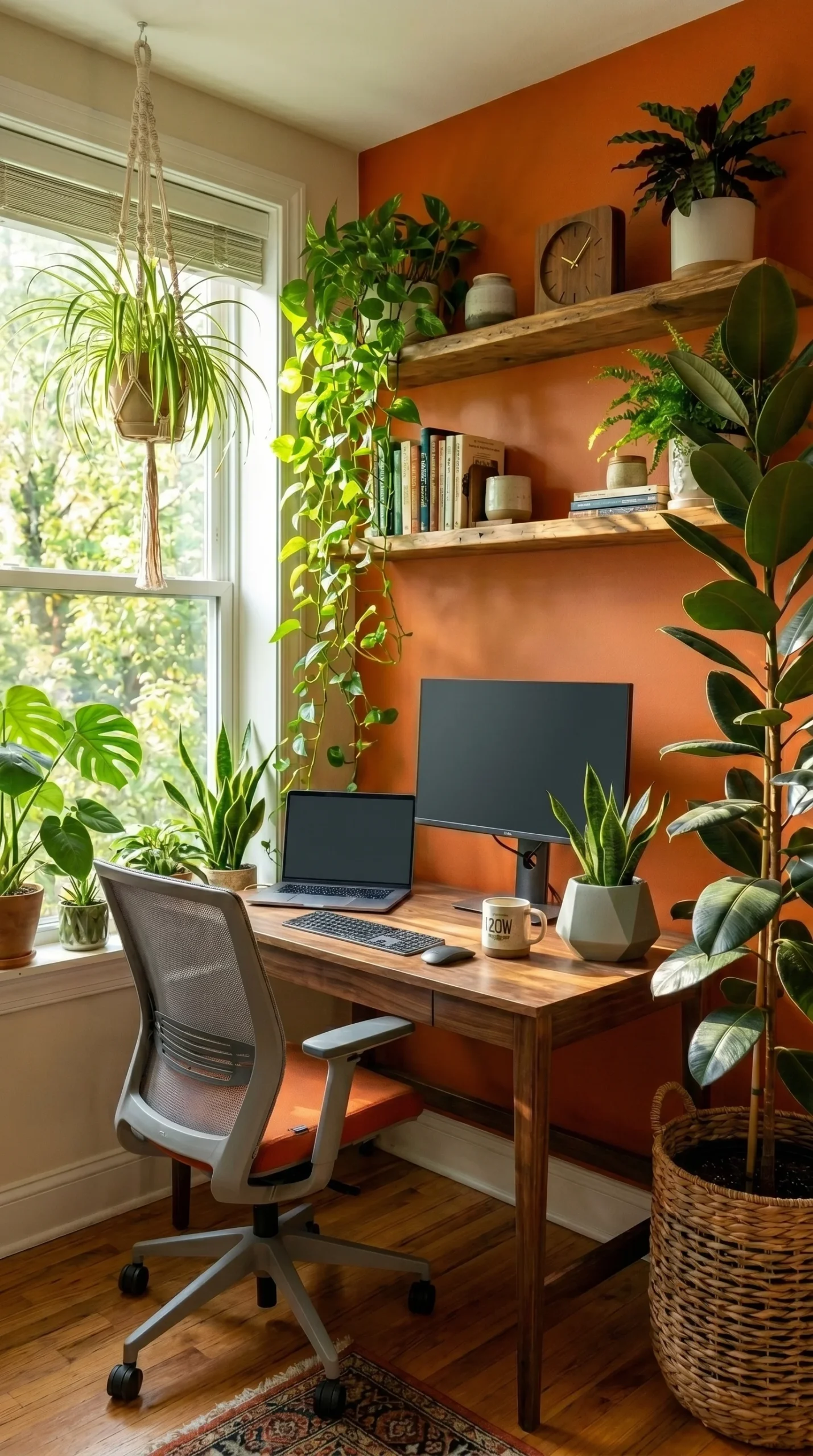
7. Incorporate Greenery for Wellness and Air Quality
Plants improve both the physical air quality of your home office and the psychological benefits of working in nature-inspired spaces.
Best Office Plants
Pothos thrive in low light and require minimal care, perfect for dark corners that need life without demanding attention.
Snake plants tolerate neglect while filtering toxins from the air, ideal for busy professionals who might forget to water regularly.
Rubber plants add substantial visual impact in small spaces with large leaves that create lush aesthetics while improving air quality.
ZZ plants are nearly indestructible and thrive in various lighting conditions, providing green beauty without horticultural expertise.
Spider plants propagate easily and cascade beautifully from hanging planters or shelves, adding vertical green without taking floor space.
Monstera provides impressive foliage in surprisingly compact sizes, making a statement with minimal space requirements.
Strategic Plant Placement
Group plants together for greater visual impact and easier care routines than scattered single pots.
Use hanging planters to add greenery without consuming precious floor and desk space.
Position near windows to provide natural light that plants need while benefiting from the visual connection to outside views.
Add humidity-loving plants if your office lacks natural moisture, improving air quality while adapting to small spaces.
Health Benefits
Improved air quality through plants that filter toxins boosts oxygen levels and reduces eye strain.
Mental health enhancement from viewing and caring for plants reduces stress and improves focus.
Biophilic connection to nature creates more satisfying work environments that encourage productivity.
8. Maximize Natural Light and Window Views
Natural light is precious in small home offices, reducing eye strain, improving mood, and creating more open, spacious feelings.
Light-Maximizing Strategies
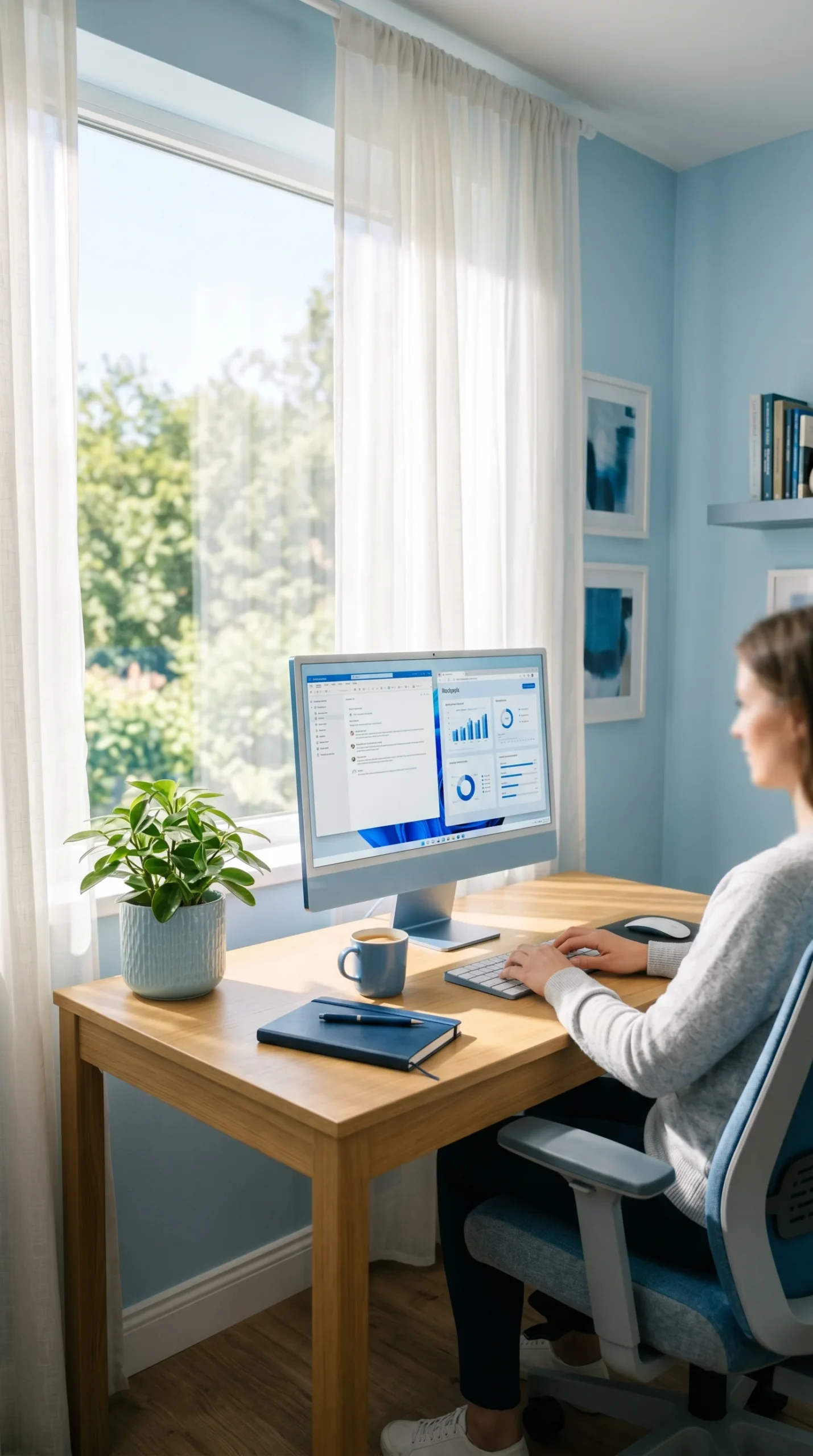
Position desks near windows whenever possible to benefit from natural illumination and views that reduce mental fatigue.
Use sheer curtains or light-filtering shades that maintain privacy while allowing maximum light penetration during work hours.
Paint walls in light colors that reflect natural light deeper into the room, amplifying the benefits of available windows.
Install mirrors opposite windows to reflect light deeper into spaces, effectively multiplying available illumination.
Keep windowsills clear of clutter and storage, allowing unobstructed light entry and maintaining views that reduce eye strain.
Managing Glare and Screen Visibility
Position monitors perpendicular to windows rather than facing them directly, preventing screen glare that washes out displays.
Use monitor arms that adjust height and angle, allowing fine positioning to manage glare while maintaining proper viewing angles.
Install window treatments that block glare during bright times while allowing diffused light, finding the balance between visibility and light quality.
Consider anti-glare filters on monitors if repositioning isn’t possible, protecting your eyes and improving screen visibility.
Circadian Rhythm Benefits
Morning light exposure from windows supports natural sleep-wake cycles, improving energy and focus.
View access to outdoor scenery reduces eye fatigue from continuous screen focus, a critical benefit in small offices where you can’t move around.
Seasonal light changes naturally regulate energy levels if your office receives varying light throughout the year.
9. Install Multi-Functional Furniture and Storage
Multi-purpose furniture maximizes the utility of every item in small home offices, ensuring each piece serves multiple functions.
Multi-Functional Furniture Options
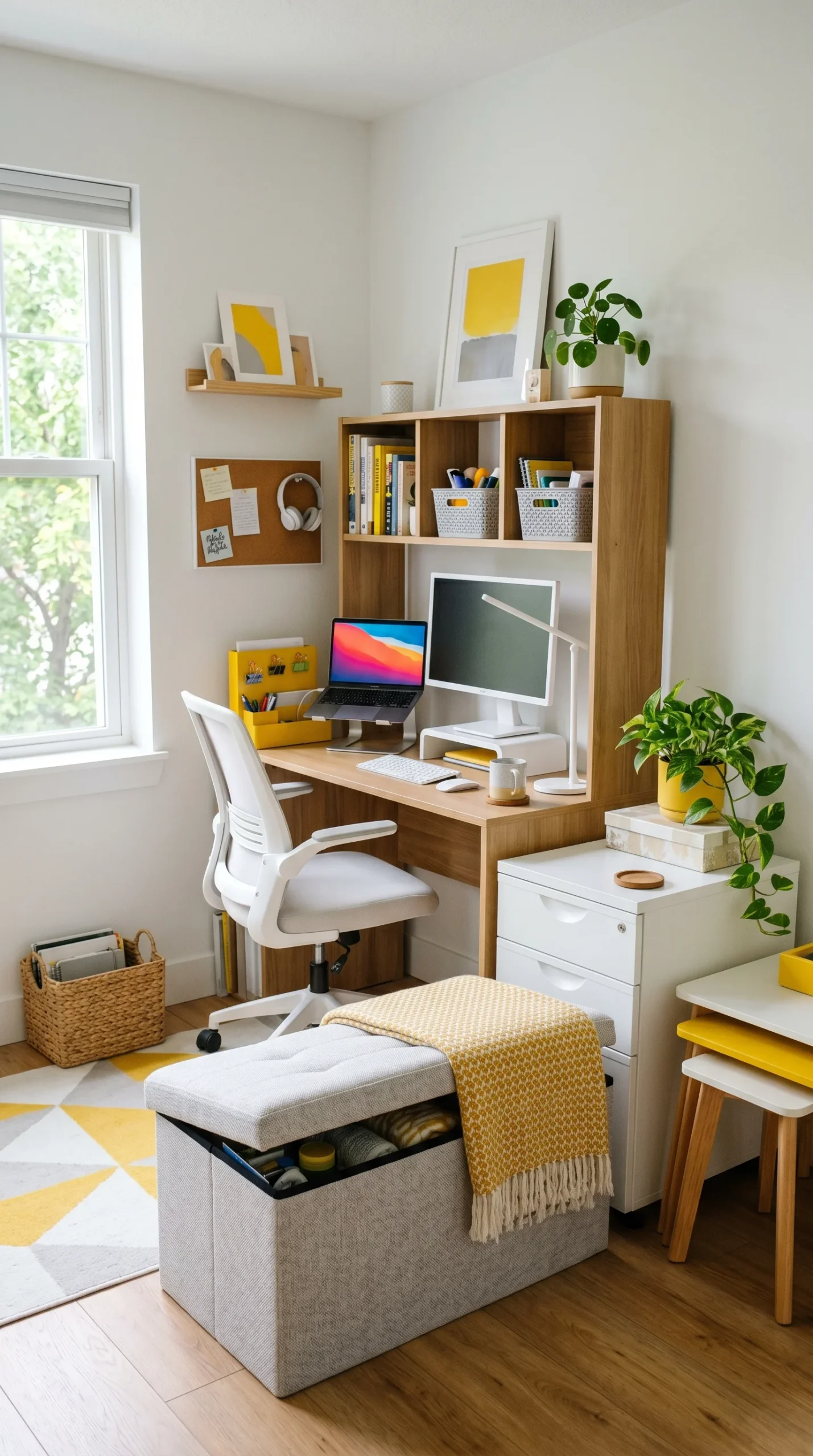
Desk organizers with shelving above desks provide storage without using separate furniture, keeping supplies organized and visible.
File cabinets that double as nightstands or side tables serve both storage and surface purposes, reducing the number of items needed.
Storage benches at windows or along walls provide seating, storage, and display surfaces, serving triple duty in compact spaces.
Shelving units with built-in workspace combine display, storage, and desk surfaces in a single furniture piece.
Nesting tables that expand for projects then collapse back to minimal footprints, adapt to changing work needs.
Ottoman storage provides seating plus hidden storage for files, supplies, or cables, hidden from view but easily accessible.
Space-Saving Strategies
Think vertically about every piece, choosing tall, narrow furniture over wide, shallow items that consume valuable floor space.
Prioritize flexibility by selecting adaptable pieces that reconfigure as your needs change.
Minimize decorative items that serve no functional purpose, keeping surfaces organized and clutter-free.
Combine functions wherever possible, ensuring every piece contributes multiple purposes.
10. Organize with Cable Management Systems
Cables and cords create visual chaos in small spaces, and proper cable management keeps offices looking clean and professional.
Cable Management Solutions
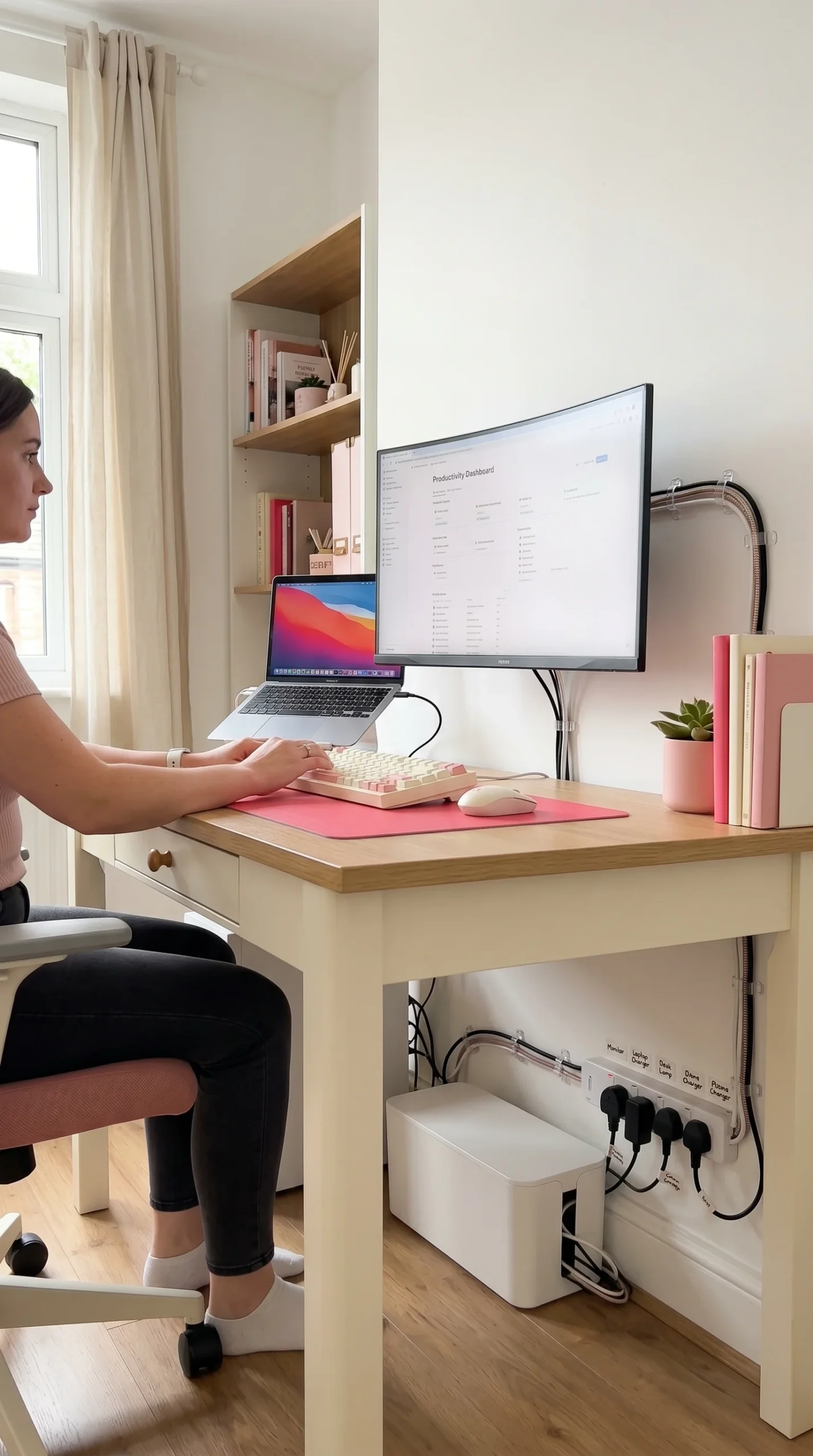
Cable boxes or sleeves hide tangled wires, keeping them organized and out of sight while maintaining accessibility for changes.
Adhesive cable clips keep cords along walls or under desks, eliminating visible cables that create visual clutter in small spaces.
Power strips with organizing features keep multiple cables controlled near their power source rather than scattered across surfaces.
Wall-mounted cable ducts create channels that run cables neatly along walls toward centralized power, creating intentional rather than chaotic appearances.
Velcro cable ties bundle together cables traveling the same routes, organizing multiple wires into single neat bundles.
Wireless technology, where possible, eliminates cables, reducing clutter through fewer physical connections.
Organization Best Practices
Label cables at both ends to identify what each one does, making future changes or troubleshooting faster and less frustrating.
Keep cables accessible even when hidden so you can easily unplug or adjust equipment without complete cable system rework.
Plan cable routes during furniture placement, positioning items to minimize cable visibility and create natural pathways.
Maintain flexibility in cable systems for technology changes, allowing easy addition or removal of devices without permanent restrictions.
11. Create a Welcoming Aesthetic with Décor
Personal touches and thoughtful décor transform your home office from a purely functional space into an environment you genuinely enjoy spending time in.
Décor Elements That Work in Small Spaces
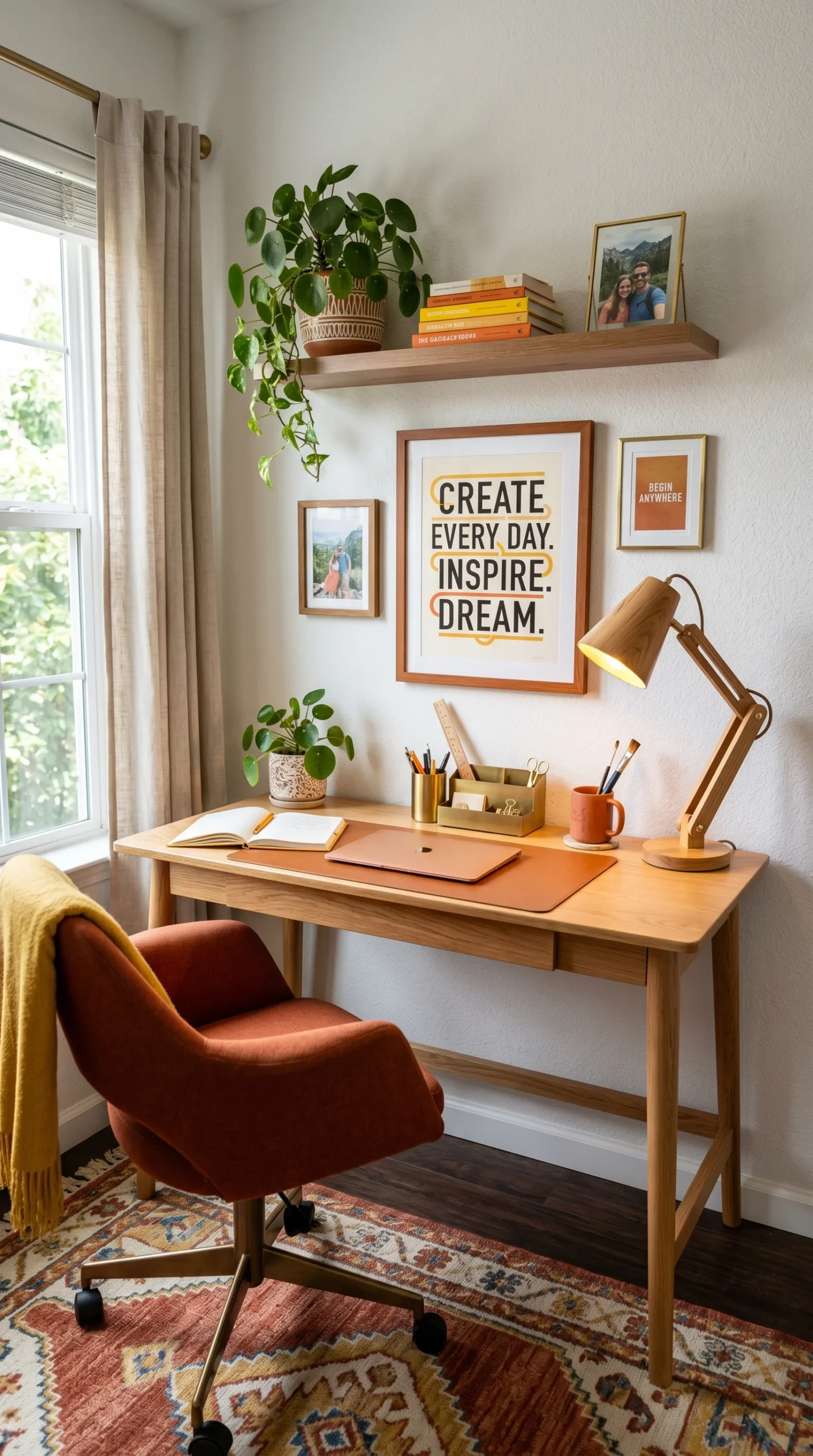
Framed motivational quotes or personal photos add personality while reinforcing your work goals and positive mindset.
Abstract artwork in coordinating colors adds visual interest without the visual weight of large realistic images.
Decorative objects in limited quantities display personal style while maintaining the organization necessary in small spaces.
Desk organizers in attractive materials like brass, ceramic, or wood serve functional purposes while looking beautiful.
A desk lamp with an interesting design serves as both lighting and a decorative focal point that improves your workspace aesthetically.
Maintaining Balance
Avoid over-decorating, which creates visual noise that undermines productivity in small spaces.
Choose pieces that inspire you rather than following generic office décor advice that lacks personal connection.
Rotate seasonal items to keep your space feeling fresh without permanent clutter or crowding.
Display only items you genuinely love, removing anything that feels obligatory or doesn’t spark joy.
Keep surfaces relatively clear with only active tools and one or two decorative pieces visible, preserving the open feeling necessary in small offices.
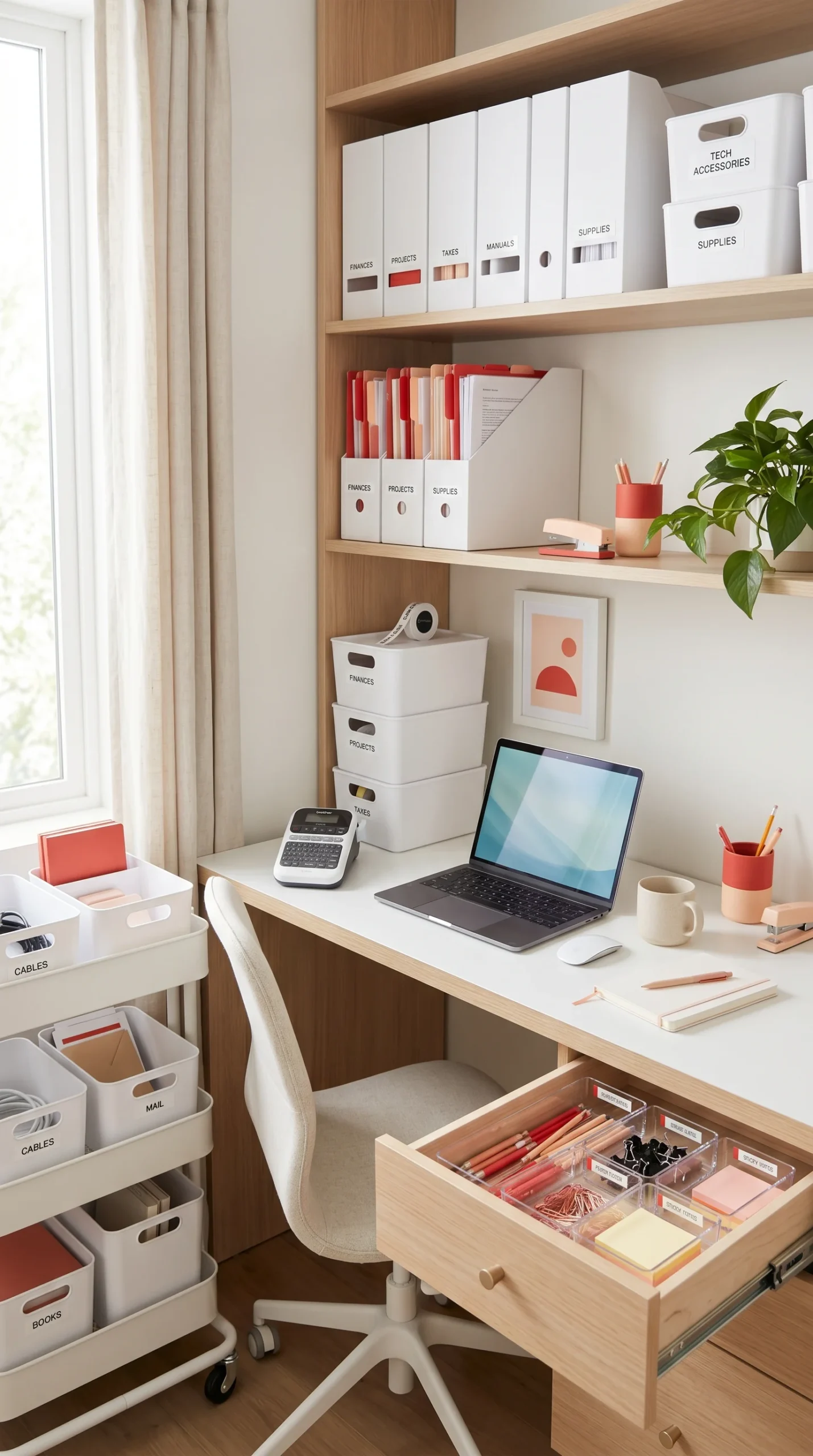
12. Maintain Clutter Control Through Organization Systems
Small home offices show clutter more readily than large spaces, making organization systems essential for both appearance and productivity.
Organization Essentials
Filing systems keep papers organized and accessible, preventing the piles that accumulate and consume precious desk space.
Drawer organizers maximize cabinet capacity by compartmentalizing contents, making items easier to find and retrieve.
Label makers create clear identification systems for files, shelves, and containers, reducing search time and maintaining consistency.
Container systems in matching materials group supplies by category, creating visually unified storage that looks intentional.
Regular purging schedules eliminate accumulated items you no longer need, preventing small spaces from becoming storage repositories.
Digital organization through cloud storage, email folders, and digital file systems reduces physical paper accumulation.
Maintenance Habits
End-of-week resets, where you file papers, clear surfaces, and organize supplies, maintain cleanliness throughout the week.
Daily 10-minute tidying prevents clutter accumulation from becoming overwhelming, keeping your office ready for focused work.
Document management, establishing clear systems for what gets printed, filed, and stored, prevents paper chaos.
Regular technology audits, eliminating unused cables, old devices, and outdated equipment, keep your office relevant and efficient.
Seasonal deep cleaning reorganizes systems that have drifted from their original purpose, resetting your office for continued productivity.
YOU MAY LIKE
Bedroom Decor on a Budget: 7 Changes That Work Under $300
How to Style a Small Balcony on a Budget: Cozy & Stylish Ideas for 2026
Creating Your Perfect Small Home Office
Designing a small home office that supports both productivity and personal comfort requires thoughtful integration of these strategies. Success comes from selecting solutions that address your specific space challenges and working style.
Planning Your Space
- Measure accurately to understand your actual dimensions and limitations, noting windows, electrical outlets, and any architectural features that affect design.
- Identify your priorities based on whether you need focused creative work, video conferencing, detailed administrative tasks, or a combination of activities.
- Test before purchasing large furniture items when possible, ensuring they actually fit and function in your space before commitment.
- Plan for growth by building flexibility into your setup, allowing adjustments as your work evolves or technology changes.
Making Strategic Choices
- Invest in ergonomic seating and proper desk height since you’ll spend extended time on these items, affecting your health and productivity.
- Prioritize natural light and proper artificial lighting for eye health and mental wellness during long work hours.
- Choose storage based on actual needs rather than perceived future requirements, preventing overbuying that overwhelms small spaces.
- Maintain visual cohesion through consistent materials, colors, and styles that create intentional design rather than haphazard collections.
Conclusion
Your small home office has tremendous potential despite its compact size. The 12 ideas we’ve explored provide comprehensive strategies for creating a workspace that’s both productive and beautiful.
Remember that your ideal home office develops over time, with initial setup providing the foundation that evolves as you discover what works best for your specific work style and lifestyle.
The goal isn’t creating a magazine-perfect showpiece but rather designing a functional, comfortable workspace where you do your best work while genuinely enjoying spending time there.
Please note: This post may contain affiliate links, meaning I may earn a small commission at no extra cost to you. Your support helps keep the content coming – thank you!

I’m Shaheen, the writer behind every article on FahadsGuide. I research and write practical guides on budgeting smarter, setting up better living spaces, using AI tools effectively, and building daily habits that actually stick. Background in motivational content on YouTube.Every article is researched and written to be genuinely useful, not just readable.