The Gardens That Get Ignored Are Often the Ones With the Most Potential
There is a particular kind of defeat that sets in when you open the back door and look at a small patch of outdoor space that has never been properly thought about. A cracked paving slab. A fence that needs painting. A single neglected pot in the corner. It is easy to dismiss a space that small as not worth the effort, to assume that meaningful garden design requires room to spread out, or money to spend, or both.
That assumption is wrong, and this article is built around proving it. Small garden ideas do not need a large canvas to succeed. What they need is deliberate thinking about how to use, layer, and plant a compact space. The gardens that feel most considered are rarely the biggest ones. Some of the most impressive outdoor spaces are under fifteen square metres, because the size forced the designer to make every decision count. Whether you are looking at a tiny garden design from scratch or rethinking a neglected patio, the principles of a compact garden layout are consistent regardless of how many slabs you’re standing on.
A small outdoor space makeover does not require a landscaper or a large budget. It requires a clear plan, a few foundational decisions, and small garden planting ideas to make vertical and seasonal space work as hard as the ground does. A budget garden transformation is possible even in ten square metres. It is, in many ways, easier than transforming a large one.
Start With the Floor: What You Lay Down Changes Everything Else
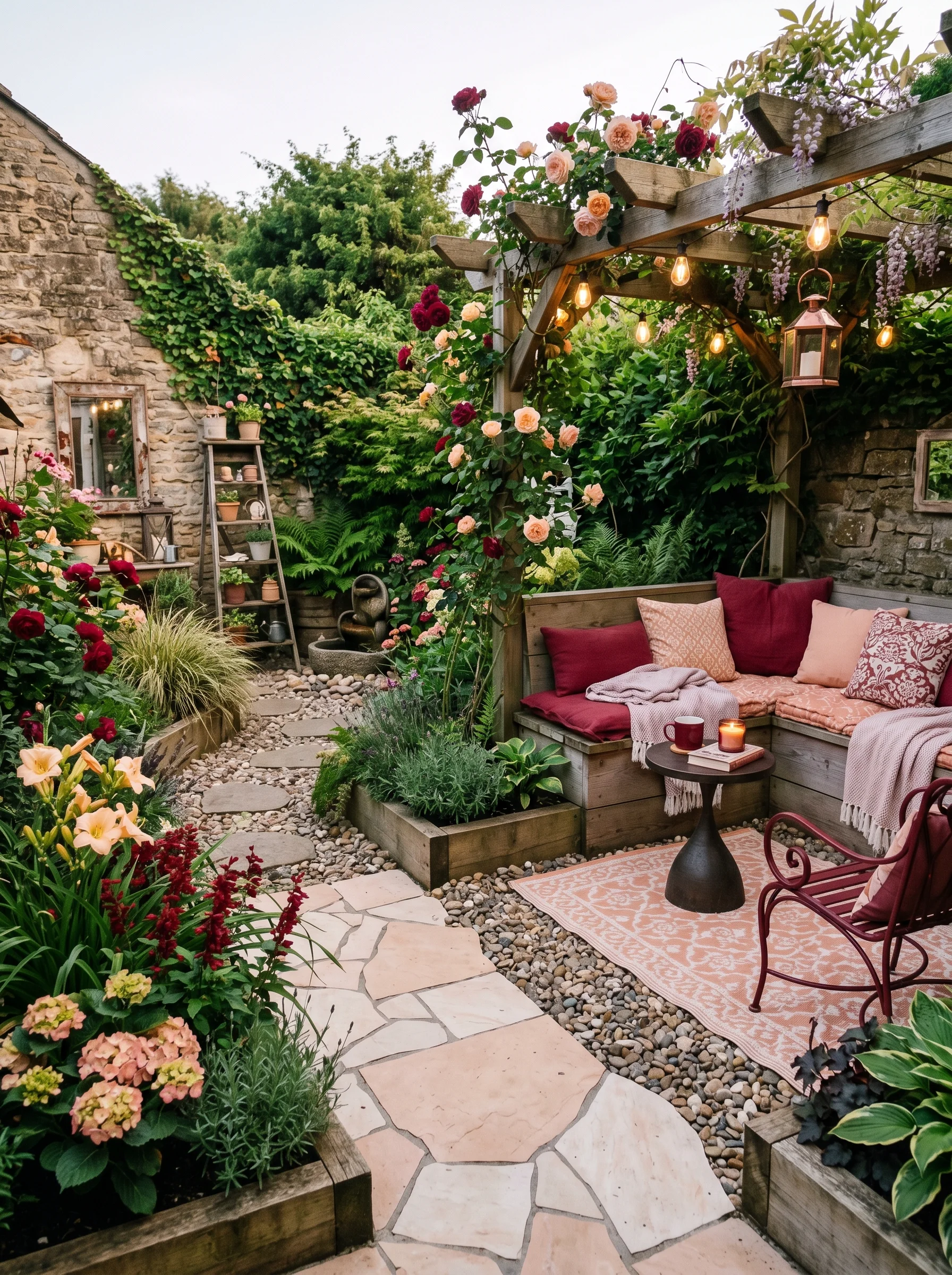
Before a single plant goes in the ground, the surface underfoot sets the tone for every decision that follows. A tired, uneven concrete slab reads as neglect regardless of what surrounds it. A clean, considered floor surface reads as intentional regardless of how simple everything above it is.
The good news is that you do not need to rip up existing paving to improve it. Porcelain paving tiles, composite decking boards, or even high-quality artificial grass laid directly over an existing surface can transform the base of a small garden in a single weekend. Gravel with stepping stones is another option that costs very little and creates a sense of path and purpose in a space that might otherwise feel like one undifferentiated area.
For a ten-square-metre garden, the floor surface is also a proportion decision. Mixing two materials, such as a small section of decking or gravel alongside the main paved area, creates visual zones that make the space feel larger than it is. A garden with no defined zones reads as a single small room. A garden with even one subtle material change reads as a space with structure.
What most people skip: Pressure-washing the existing surface before making any other decision. A clean paved or concrete surface often looks dramatically different once years of weather and moss are removed. It is worth doing before spending anything else, because it changes what the space actually needs.
Vertical Space Is the Most Underused Asset in Any Small Garden
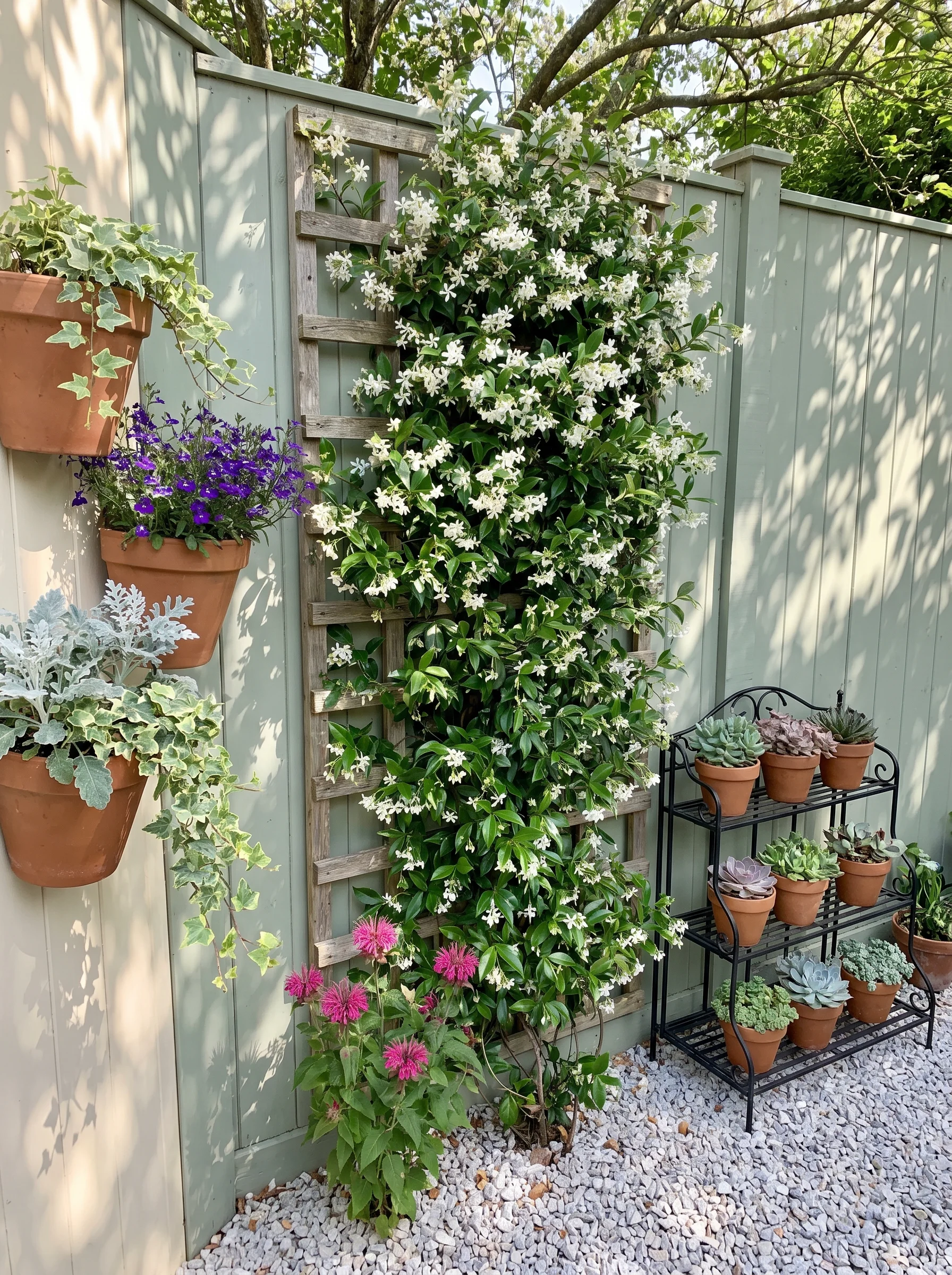
In a ten-square-metre garden, the ground is a limited resource. The walls and fences are not. Treating vertical surfaces as part of the planting and design plan is the single most effective way to make a small outdoor space feel generous rather than cramped.
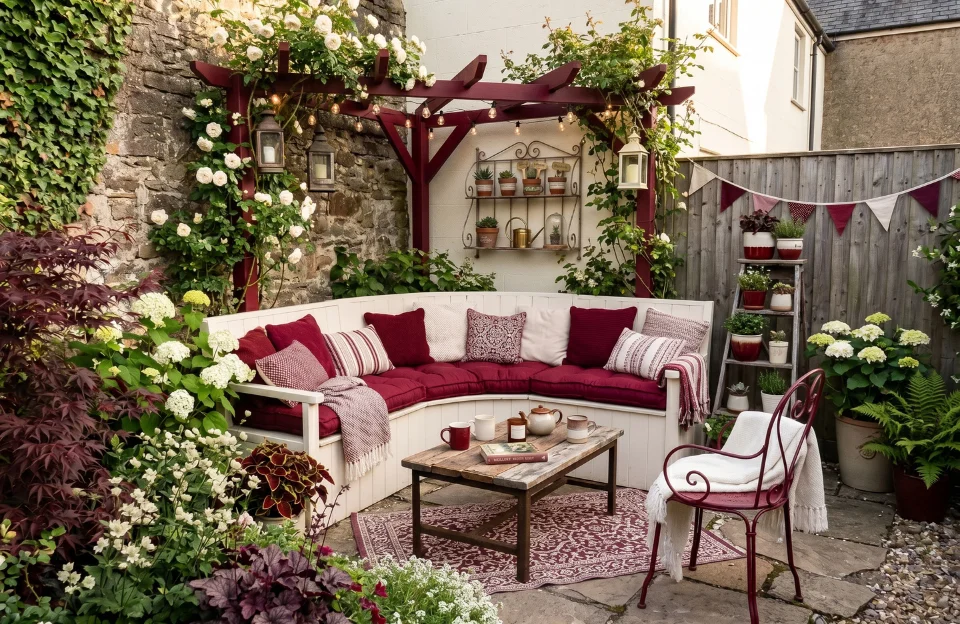
A simple timber trellis fixed to a fence panel costs very little and immediately creates a planting structure for climbing plants. Clematis, climbing roses, jasmine, and wisteria all travel upward and outward rather than consuming ground space. A single established climbing plant covering a six-foot fence panel changes the entire atmosphere of a small garden, because it replaces a hard, flat boundary with a textured, living surface.
If you’d like to recreate this layered look, consider adding a simple garden trellis to an existing fence or wall.
Recommended Product: Wooden Garden Trellis Panel
Why It Works: A trellis instantly adds vertical growing space for climbing plants, helping small gardens feel greener and more established without sacrificing precious floor area.
Wall-mounted planters are another layer of vertical planting that works even on a rented property where drilling into brickwork might not be permitted. Over-the-fence hooks and freestanding tiered plant stands achieve the same layering effect without fixing anything permanently.
For an easy upgrade, consider using tiered plant stands or hanging planters to maximise vertical space.
Recommended Product: Tiered Outdoor Plant Stand
Why It Works: Tiered plant stands allow you to display multiple plants in a compact footprint while creating visual height and interest.
The Plants That Do the Most Work Vertically
Clematis is a reliable performer in a compact garden because it grows quickly, flowers generously, and takes up almost no ground space once established. Ivy provides dense coverage for unsightly fencing year-round. Climbing hydrangea is slower but produces a striking display and tolerates shadier walls better than most. For edible options, runner beans on a simple cane structure and wall-trained espalier apple or pear trees are both excellent choices that earn their place in a small space.
Raised Beds: Structure, Depth, and More Growing Space Than You’d Expect
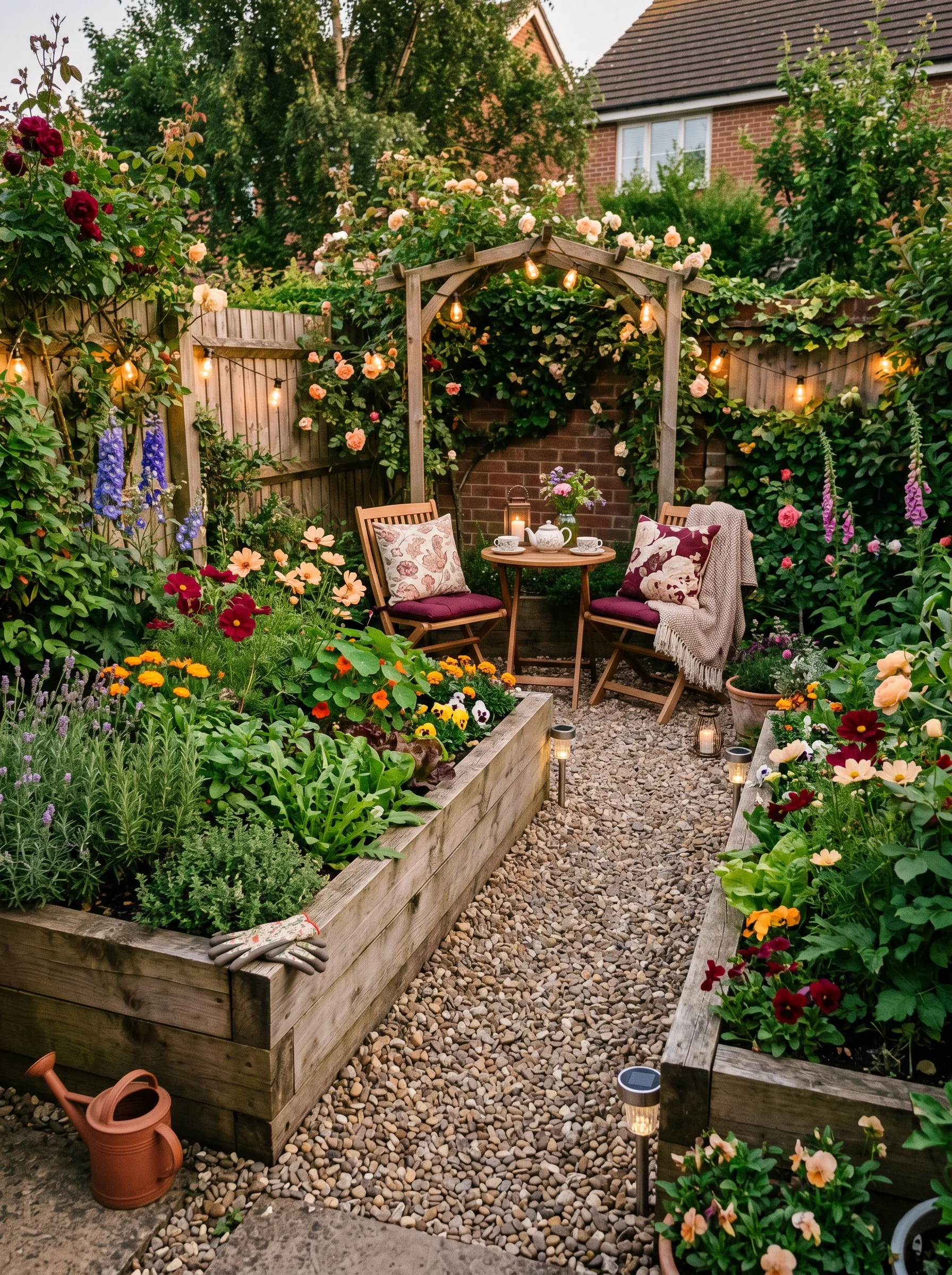
A raised bed in a small garden does something that in-ground planting cannot. It lifts the growing surface, creates an immediate visual anchor, and dramatically improves drainage and soil quality without any ground preparation work. In a space where the existing soil might be compacted, poorly draining, or shaded by surrounding buildings, a raised bed filled with quality compost and topsoil bypasses all of that.
A single raised bed measuring 1.2 metres by 0.6 metres occupies a small footprint but can produce a surprising volume of herbs, salad leaves, strawberries, or compact vegetables like courgettes and climbing beans. Two raised beds of that size with a gravel or bark path between them immediately give a ten-square-metre garden a structured, deliberate layout that reads as designed rather than accidental.
Timber sleepers are the most common material, but galvanised steel raised beds have become increasingly popular for a more contemporary look. Both are available at garden centres and large DIY retailers, and both can be assembled in an afternoon without specialist tools.
The depth question most beginners ask: A raised bed does not need to be deep to be productive. Twenty centimetres of good-quality compost is sufficient for most herbs and salad crops. Thirty centimetres accommodates root vegetables like carrots and beetroot comfortably. A bed that is only fifteen centimetres deep is still workable for shallow-rooted plants like lettuce, basil, and radishes.
Furniture That Fits: Choosing Pieces for Proportion, Not Just Style
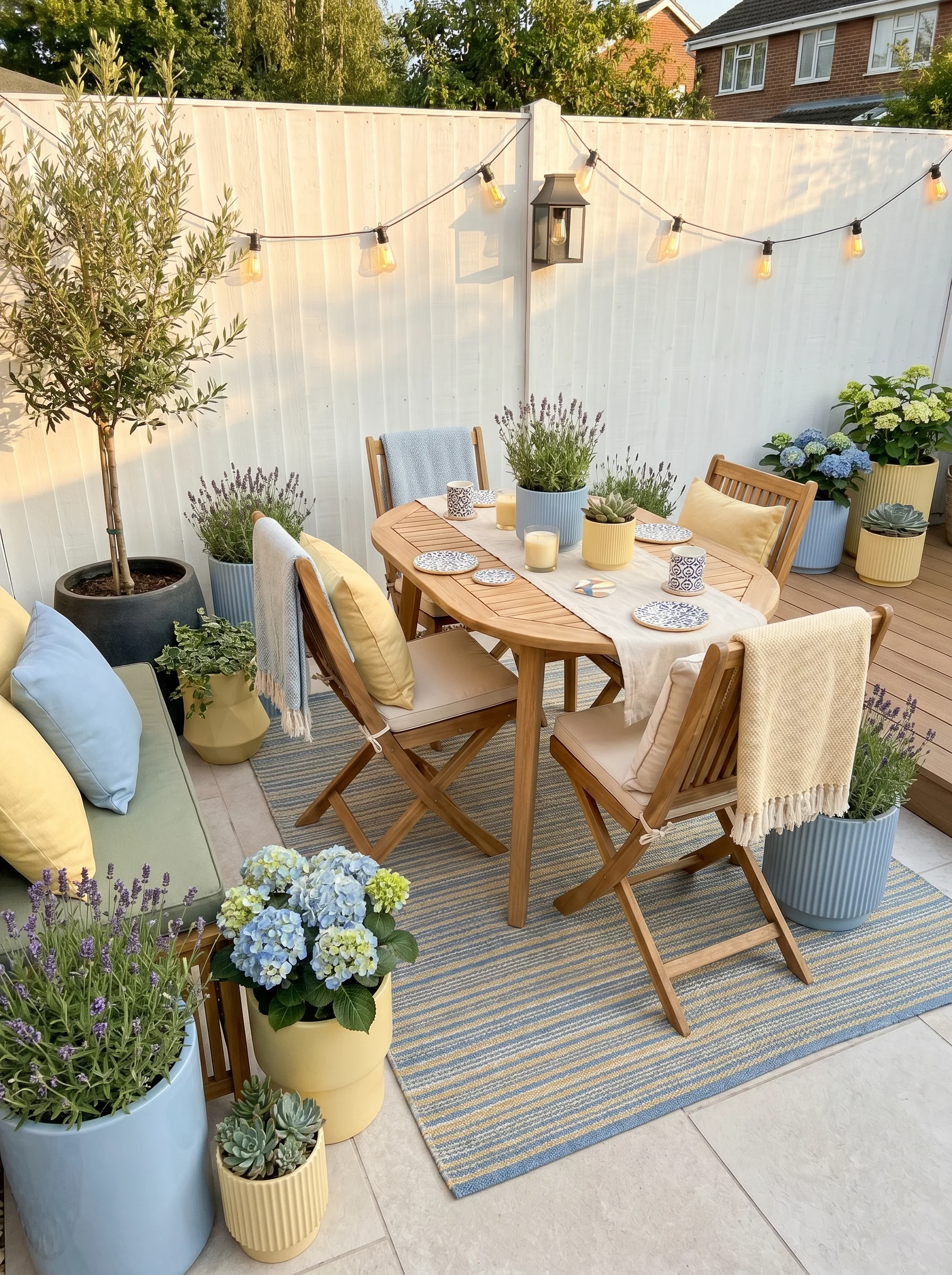
Outdoor furniture is where small garden design most often goes wrong. A large corner sofa or a six-seat dining table that works perfectly in a larger garden will consume a ten-square-metre space entirely, leaving no room for planting, movement, or the sense of a garden rather than an outdoor furniture showroom.
The principle for small spaces is to choose the smallest piece that comfortably seats the number of people who will realistically use it at one time. For most households, that is two to four people. A bistro table with two folding chairs, a small bench against a wall with a low coffee table, or a narrow dining table that seats four without extending are all proportionally appropriate for a compact garden.
One furniture choice that works especially well in compact outdoor spaces is a folding bistro set.
Recommended Product: Outdoor Folding Bistro Set
Why It Works: A folding bistro set provides comfortable seating without overwhelming the garden, and it can easily be stored away when additional space is needed.
Folding and stackable furniture is a practical choice because it allows the space to serve multiple functions. Chairs that stack against a wall when not in use free up the floor for other activities or for children to use the space. A folding table can be stored flat during the week and brought out for weekend use.
Colour as a design tool: In a small garden, furniture colour affects perception of space. Light colours, pale wood, white, stone grey, and natural rattan, reflect light and feel open. Dark colours anchor and ground a space. Both work, but the choice should be deliberate rather than defaulting to whatever was on offer.
Lighting: The Element That Extends Your Garden Into the Evening
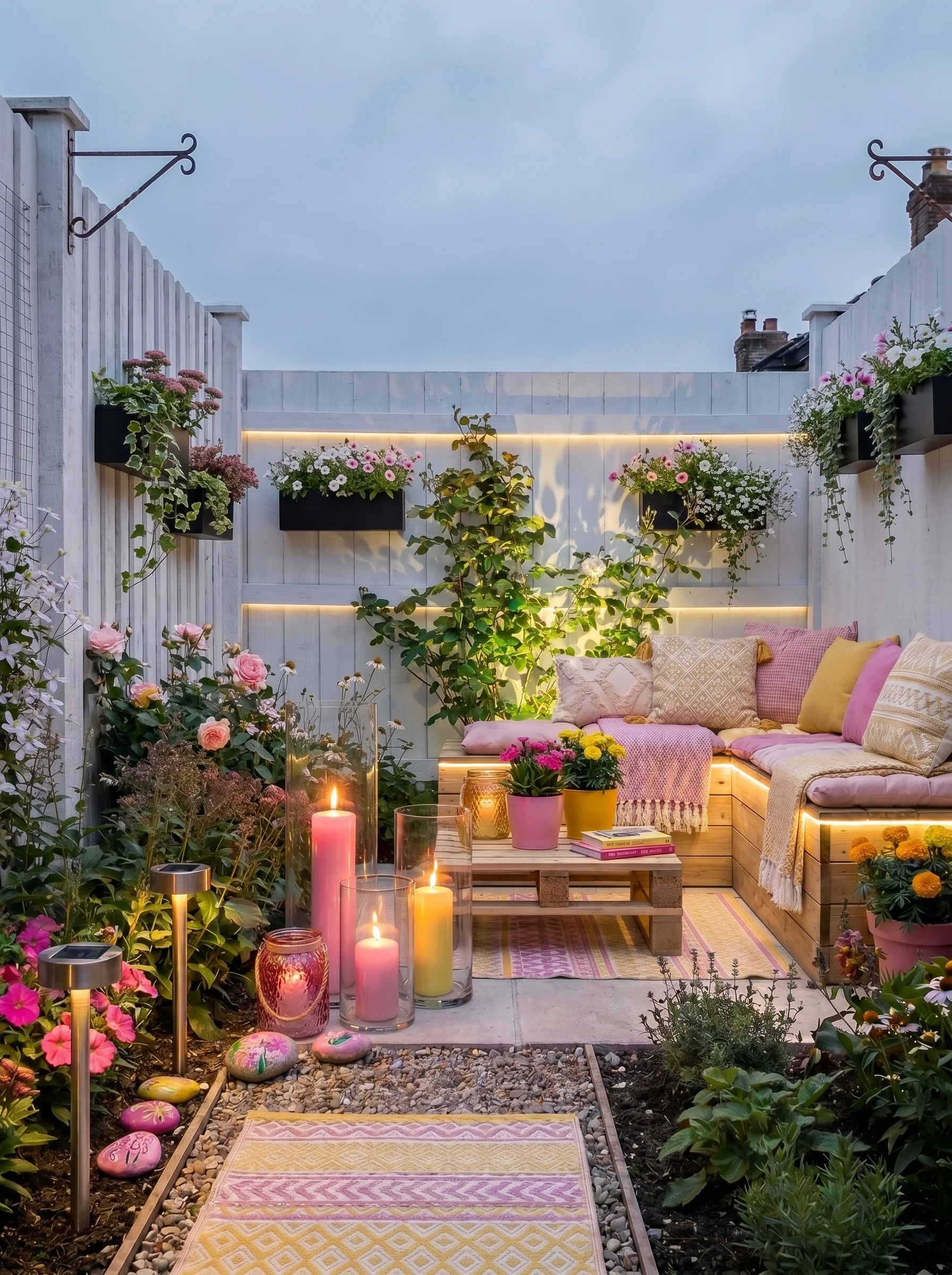
A small garden without lighting is effectively usable only during daylight hours. Given that most people are home from work in the evening, this is a significant missed opportunity. Outdoor lighting transforms even the most modest compact space into something that feels genuinely atmospheric after dark, and the investment required is minimal.
Solar-powered stake lights along a path or border require no wiring and no electrician. LED string lights threaded along a fence or overhead between two wall brackets create an entirely different mood from a single overhead light. A cluster of hurricane lanterns on the ground with pillar candles inside adds warmth and movement at a cost of almost nothing.
If you’d like to create this cozy evening atmosphere, outdoor string lights are one of the simplest upgrades you can make.
Recommended Product: Weatherproof Outdoor String Lights
Why It Works: String lights add warmth and ambience, extend the usability of the garden after dark, and instantly make a compact outdoor space feel more inviting.
The approach that works best in small gardens is layered lighting at different heights: something low along the floor, something mid-height in the planting or on the fence, and something overhead if the structure allows it. This mirrors how interior lighting design works and produces the same effect: a space that feels considered and complete rather than lit as an afterthought.
The solar light caveat: The quality of solar lights varies enormously. Budget solar lights from bargain retailers often stop holding a charge within a season. Mid-range solar lights from established garden brands perform significantly better. The price difference is usually modest, and the output, in terms of light quality and longevity, is not.
Planting for Small Spaces: Year-Round Interest Without Overcrowding
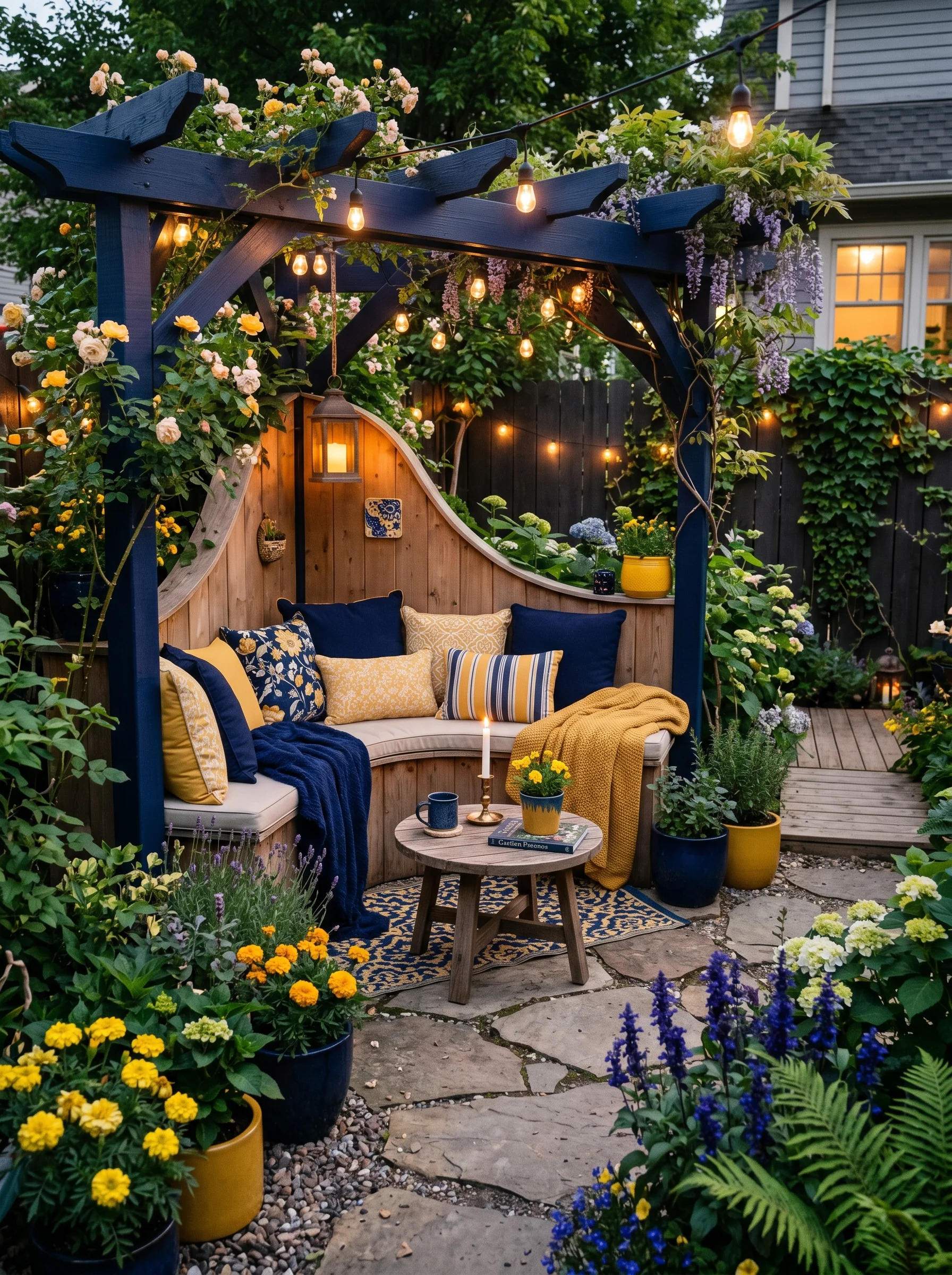
The planting mistake most small gardens make is filling every available space in spring and summer, then having nothing to look at from October through to March. A well-planned compact garden has something providing visual interest in every season, which requires building the planting plan with that in mind from the beginning.
The structural layer comes first. One or two plants that hold their form and interest through winter: an evergreen box ball, a compact architectural grass like Festuca glauca, or a slim-growing evergreen shrub like Sarcococca (which also produces intensely fragrant small flowers in late winter). These plants give the garden a backbone when everything else has died back.
The seasonal layer sits around and between those structural anchors. Spring bulbs, summer perennials, autumn-interest grasses, and winter-flowering Hellebores or Cyclamen fill in the remaining space with changing colour and texture through the year. The goal is not density but succession, that something is always doing something.
The Best Compact Plants for a Ten-Square-Metre Garden
Lavender is drought-tolerant, fragrant, and compact enough to sit at the front of a border without overwhelming its neighbours. Salvia produces long-season colour and requires almost no maintenance. Alliums add height and drama from a small bulb. Japanese Acer, kept in a container to restrict its growth, provides outstanding autumn colour and a sculptural silhouette in winter. Agapanthus in a pot gives a Mediterranean character to a paved space without needing to be planted in the ground at all.
Containers: How to Use Pots Without Making the Space Feel Cluttered
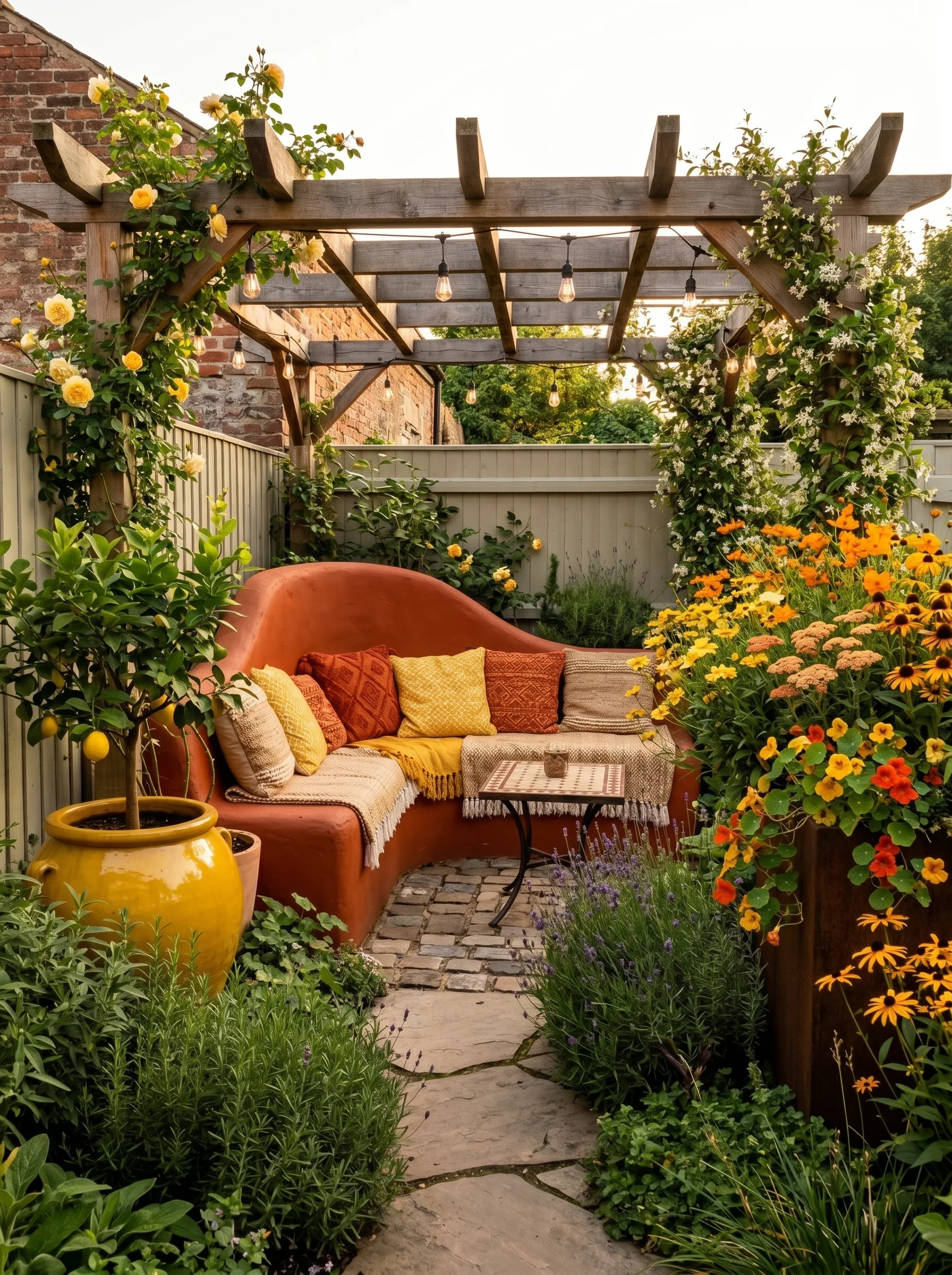
Containers are both the most flexible tool in a small garden and the most commonly misused one. A dozen small pots dotted around a compact space create visual noise and make the garden feel busy and scattered. Fewer, larger containers used deliberately produce the opposite effect.
The principle is grouping and scale. Three containers of different heights planted with complementary plants create a coherent planting moment that reads as intentional design. A single large pot, genuinely large, at least forty centimetres in diameter, used as a focal point near a door or at the end of a sight line, anchors the space without consuming it.
Matching the container material and colour brings cohesion to a small space where mismatched pots can read as accumulated clutter rather than considered planting. Terracotta, stone, grey fibreglass, and dark slate tones all work well because they recede visually and let the plants take prominence.
YOU MAY LIKE
Bedroom Decor on a Budget: 7 Changes That Work Under $300
How to Style a Small Balcony on a Budget: Cozy & Stylish Ideas for 2026
The Season My Own Small Garden Finally Clicked
I spent two summers planting and replanting a small courtyard garden that never quite felt right. The plants were fine. The furniture was appropriate. But the space felt disconnected, like a series of individual decisions that hadn’t been made to work together. The change came when I removed two-thirds of the containers, consolidated the planting into one raised bed and two large corner pots, and painted the back fence in a deep sage green. That single afternoon of editing, rather than adding, changed everything about how the space felt. It looked larger, calmer, and genuinely like somewhere I wanted to spend time. Every subsequent decision I’ve made in that garden has started with the same question: Does this add to the space, or does it compete with it?
The Rule That Ties All of This Together
Every principle in this article comes back to one underlying idea: small spaces work best when they are edited rather than filled. The instinct when dealing with a compact garden is to maximise, to squeeze in as many plants, as much furniture, and as many features as possible. The result is almost always a space that feels cluttered and visually busy.
The gardens that feel genuinely considered, the ones that make visitors comment on how much bigger they feel than they are, are almost always the result of restraint. One quality surface. One climbing plant rather than four. One or two large containers rather than twelve small ones. A lighting scheme with intention rather than a collection of everything that was on sale.
Ten square metres is not a limitation. It is a constraint that forces clarity. And in garden design, as in most things, clarity produces better results than abundance.
Please note: This post may contain affiliate links, meaning I may earn a small commission at no extra cost to you. Your support helps keep the content coming – thank you!

I’m Shaheen, the writer behind every article on FahadsGuide. I research and write practical guides on budgeting smarter, setting up better living spaces, using AI tools effectively, and building daily habits that actually stick. Background in motivational content on YouTube.Every article is researched and written to be genuinely useful, not just readable.