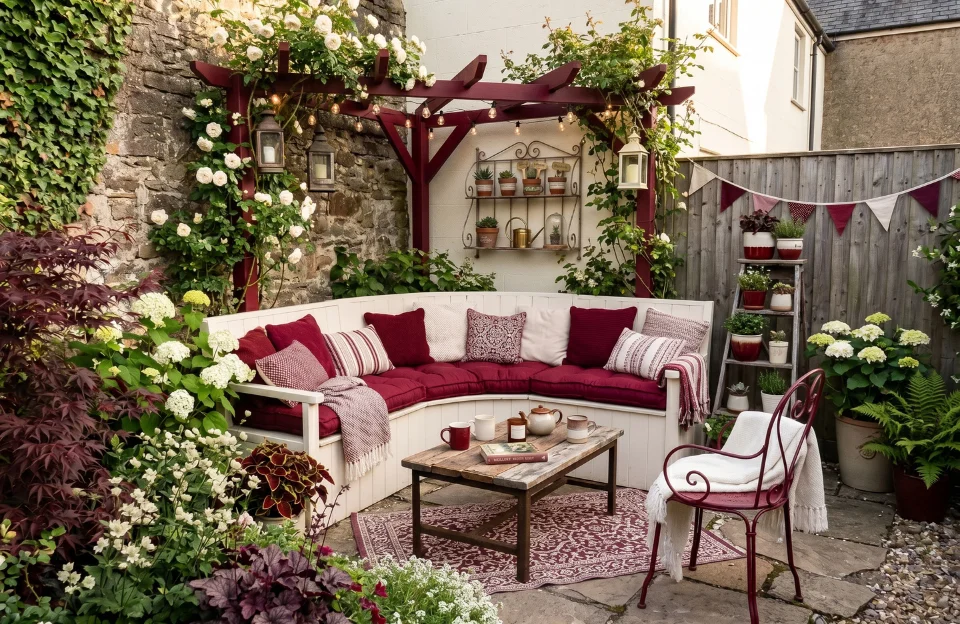
Figuring out how to style a small balcony on a budget is one of those projects that looks straightforward until you are standing in the space with a measuring tape and no clear idea where to start. My balcony is roughly 4 by 8 feet, faces north, and comes with a rusting metal railing and a concrete floor. For the first year I rented this apartment, I put nothing into it. It became the place where I kept things I could not find a home for inside.
The shift from storage overflow to somewhere I genuinely spend time in the evenings cost me under $130 and three weekends. This guide covers what I bought, what I did not buy, the small balcony furniture that actually fits without making the area feel cramped, and the outdoor balcony decor mistakes that waste money without improving anything.
Measure First, Buy Nothing Yet
This sounds obvious. Most people skip it anyway and end up with a bistro set that technically fits but leaves no room to pull the chairs out, or planters that crowd the walkway and make the whole space feel worse than it did empty.
Before spending a single pound or dollar, do three things.
Measure the floor space precisely and mark out a rough footprint of any furniture you are considering using painter’s tape on the floor. Stand in the taped outline and see whether it leaves enough room to move naturally. A balcony where you have to turn sideways to reach your chair is not a balcony worth spending money on.
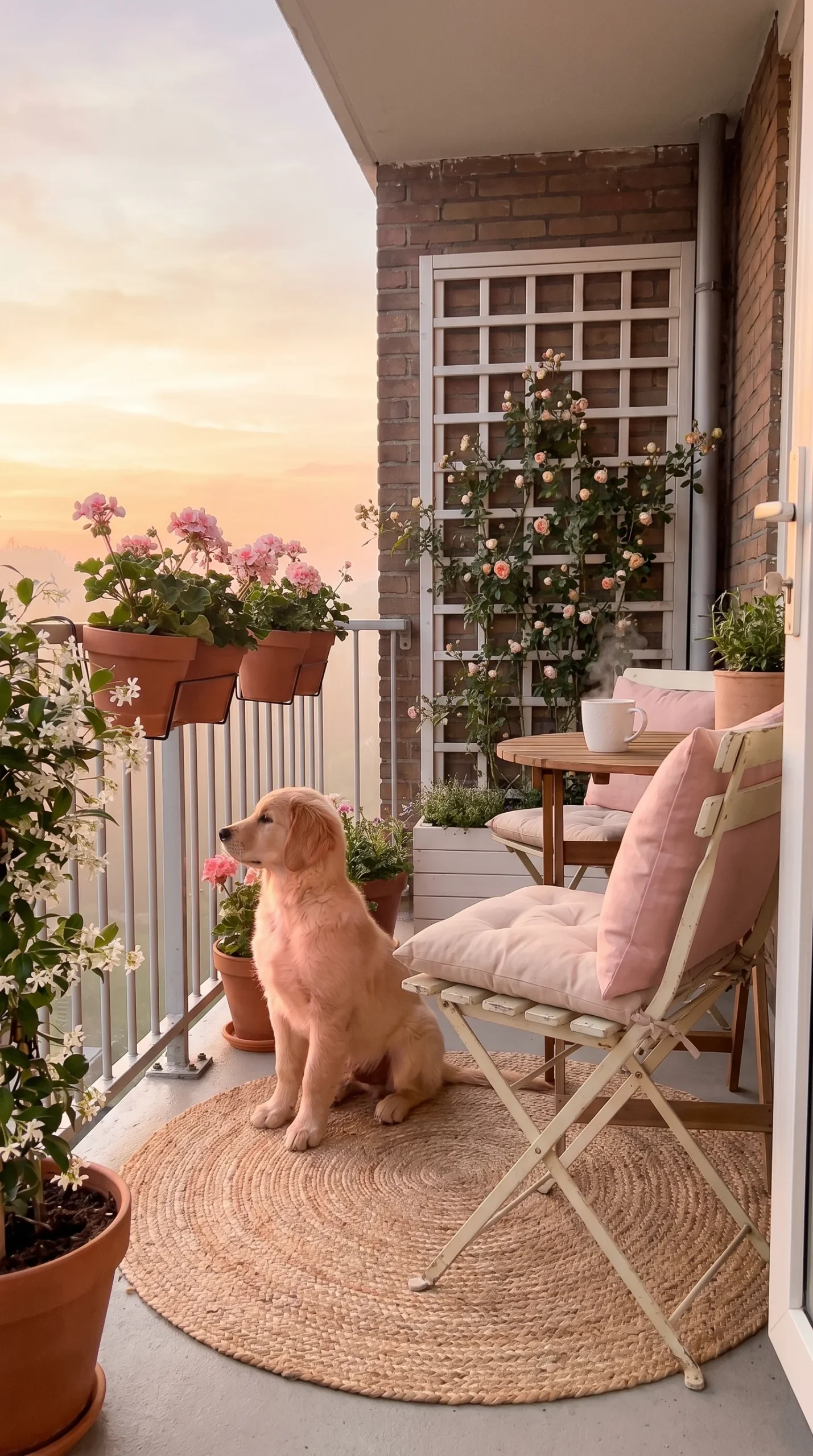
Check your lease. Renter-friendly balcony ideas have a specific constraint that homeowner guides rarely mention: some leases prohibit drilling into external walls or railings, restrict the weight you can put on the floor, or specify what can and cannot be hung from ceilings. Find your lease and read the relevant section before buying anything that requires installation.
Photograph the space in the morning and the evening. Light changes significantly throughout the day, and a balcony that looks like it needs shade in the afternoon may be perfectly comfortable by the time you actually want to use it. Knowing when the space gets sun versus shade determines the kind of plants that will survive there and whether you need a parasol or can skip it entirely.
Three steps, thirty minutes, zero money spent. Everything that follows goes considerably better when you have done them.
The Floor: One Change That Shifts Everything
Concrete or tile balcony floors are almost universal in apartment buildings and almost universally uninviting. The single change that produces the biggest visual improvement for the lowest cost is covering the floor, either with an outdoor rug or with interlocking deck tiles.
Outdoor rugs are the cheaper and more flexible option. A weather-resistant polypropylene rug in a 4 by 6-foot size costs between $25 and $45 on Amazon and changes the feel of the space immediately. The material handles moisture, UV exposure, and the occasional hosing down. Choose a neutral tone, warm grey, cream, terracotta, or natural jute-effect, rather than a bold pattern. Patterned outdoor rugs tend to look good in photos and slightly chaotic in person once you add furniture and plants on top of them.
If you’d like to recreate this cozy foundation, an outdoor rug is one of the easiest upgrades you can make.
Recommended Product: Weather-Resistant Outdoor Rug
Why It Works: An outdoor rug instantly softens concrete or tile flooring, defines the seating area, and makes a balcony feel more like an extension of your indoor living space.
Repurposing an old indoor rug works well in covered spaces. If you have a rug that has been replaced indoors but is still in reasonable condition, it can serve the same purpose without costing anything. Covered balconies handle indoor rugs reasonably well. Uncovered balconies in wet climates will shorten the lifespan of any rug considerably, so factor that in.
Interlocking wood-effect deck tiles cost more (typically $40 to $80 for a small balcony area) but produce a warmer, more finished look that reads as genuinely designed rather than accessorized. They click together without adhesive and lift easily when you move out, which makes them one of the genuinely renter-friendly options that hold up in practice rather than just in theory. Wooden interlocking tiles are stylish, durable, functional, and cost-effective and renter-friendly.
Seating: The Constraint Nobody Mentions
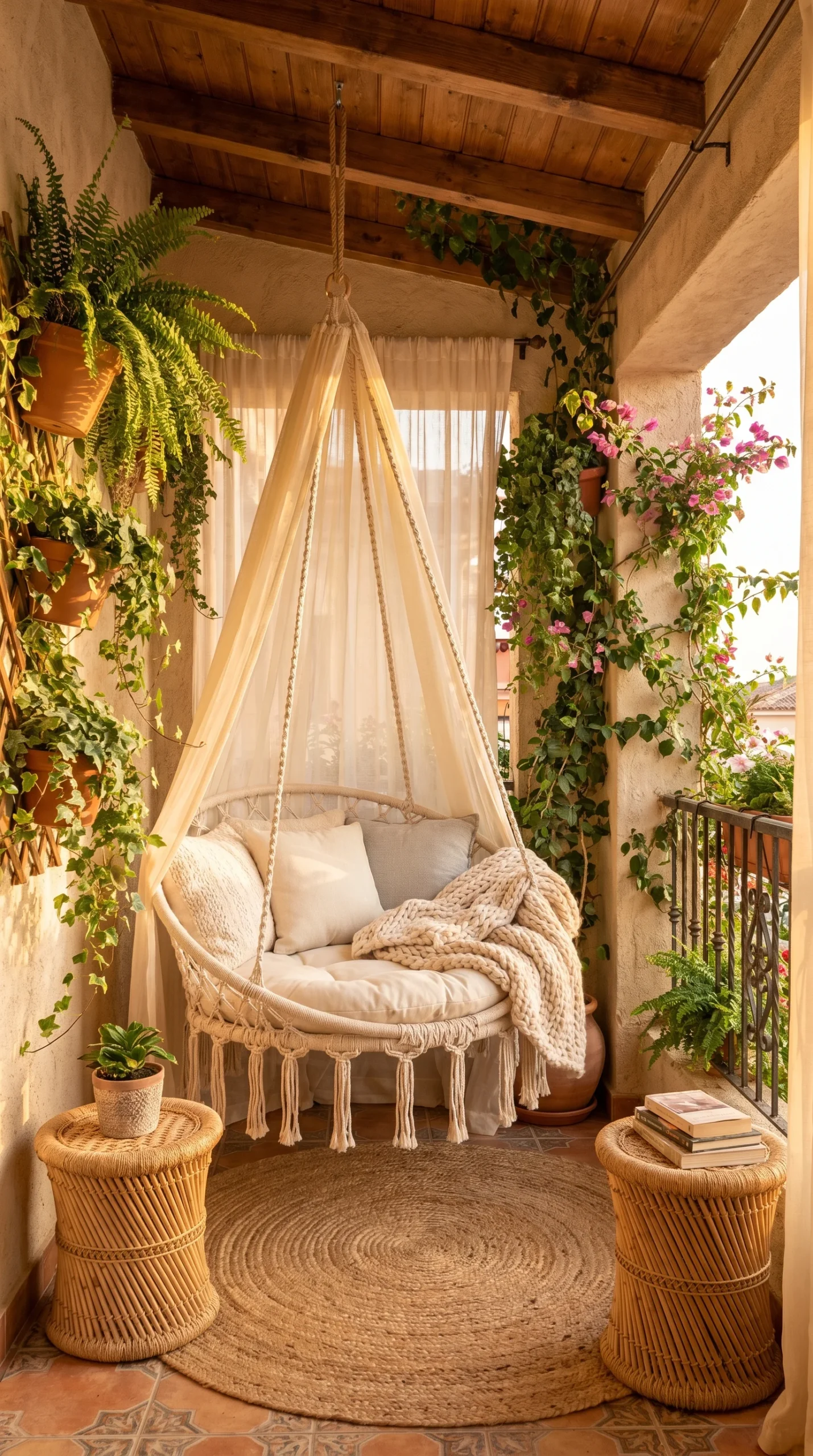
You will want to make sure the outdoor furniture you use is fairly lightweight. Wicker, rattan, wood and light metals are all great small balcony furniture options.
The seating problem on a small balcony is finding something that fits. It is finding something that fits and leaves the space feeling open rather than occupied. These are different things, and most people only discover the distinction after buying the wrong furniture.
A standard bistro set with two chairs and a small table works on balconies of approximately 4 by 6 feet and larger. Anything smaller needs a different approach.
For very small balconies (under 30 square feet): A single folding chair and a wall-mounted fold-down table cost around $50 to $80 combined and give you a functional seating area that completely disappears when not in use. This is not a compromise solution. It is frequently better than crowding two chairs into a space that only genuinely works with one.
For standard small balconies (30 to 50 square feet): A compact bistro set in metal or rattan is the right call. Look for chairs with a footprint under 20 inches wide and a table no larger than 24 inches in diameter. These proportions leave enough surrounding floor space that the balcony reads as a room rather than a furniture showroom.
One furniture piece that works especially well on compact balconies is a folding bistro set.
Recommended Product: Outdoor Folding Bistro Set
Why It Works: A folding bistro set provides comfortable seating while preserving valuable floor space, and it can easily be tucked away when not in use.
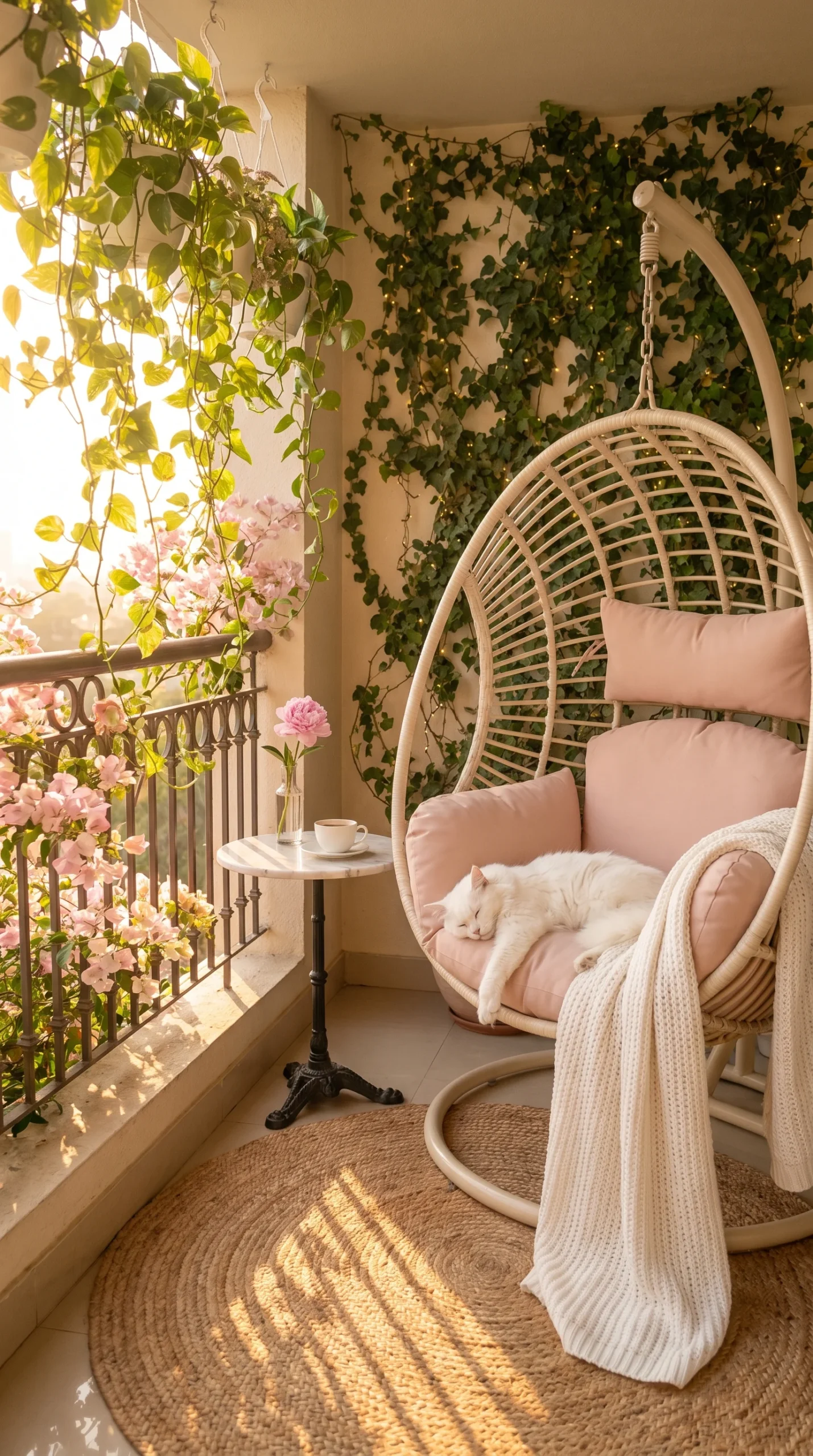
Swing chairs have exploded on Pinterest in 2026, especially among renters looking for statement seating that does not require a large footprint. They work on balconies with a covered ceiling that can support a hanging. But check your lease before buying one. Many apartment buildings restrict what can be suspended from balcony ceilings, and a swing chair arriving in a box is an expensive purchase to return.
One thing I would skip entirely for most small balconies: the fire pit. Most apartment buildings strictly prohibit open flames on balconies due to safety hazards. Consider a safer, battery-powered flickering lantern or an electric patio heater as alternatives. The ambiance is real. The lease violation and safety risk are also real. Solar-powered lanterns produce a similar evening atmosphere without the complication.
Lighting: The Part That Makes It Usable After Dark
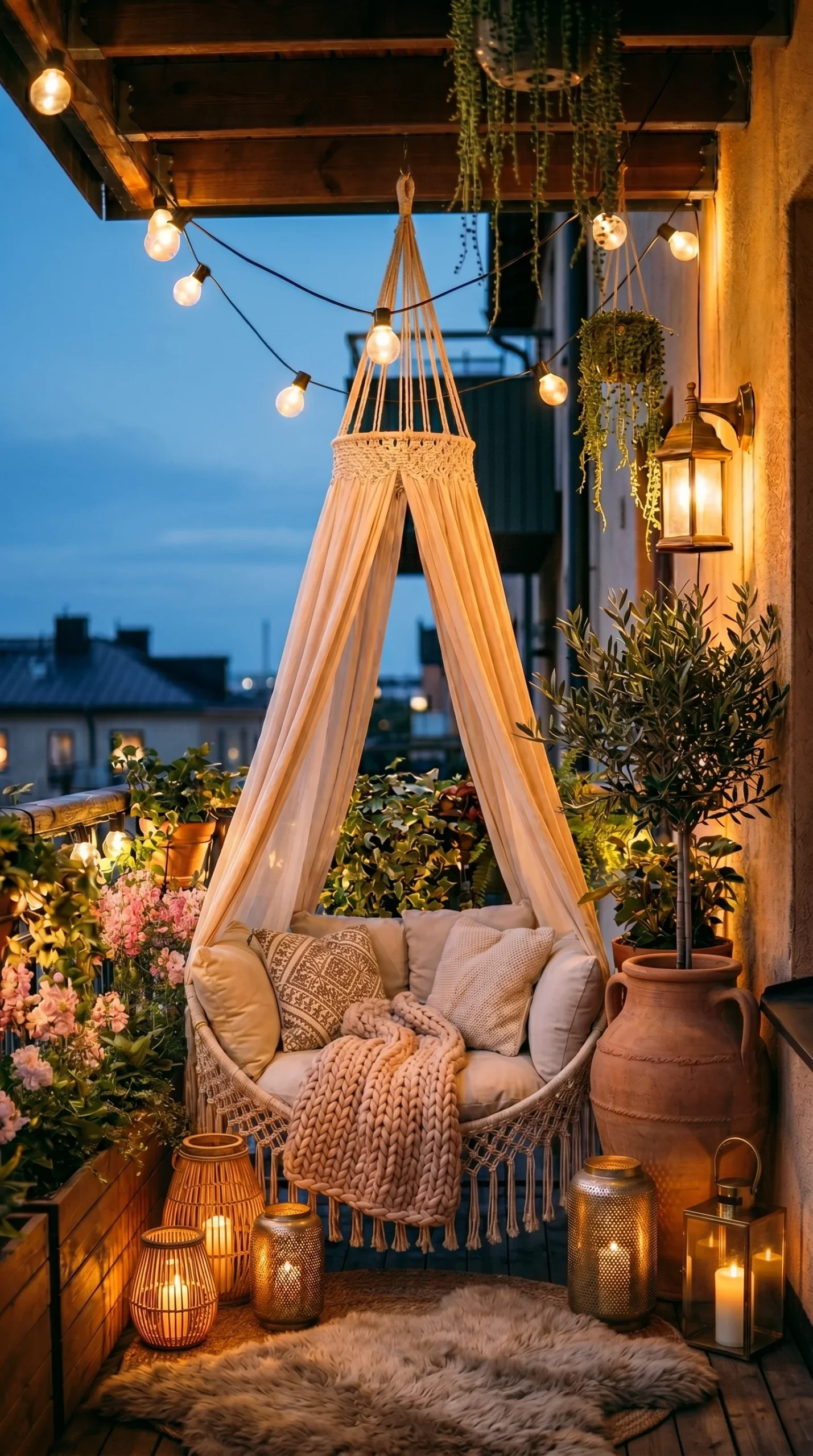
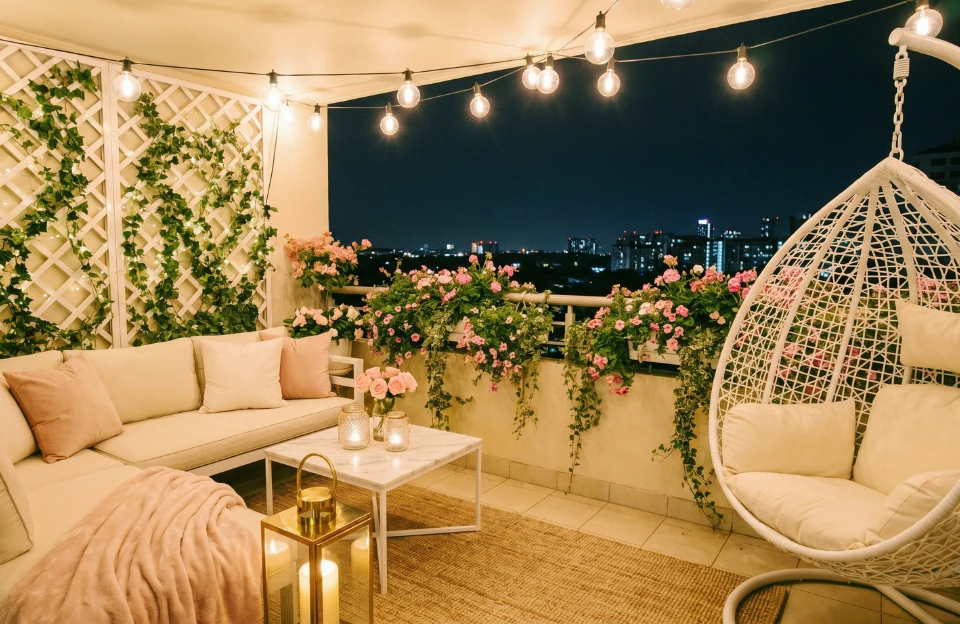
A balcony that is pleasant in the afternoon and unusable after 7 pm is a balcony you will use for three months of the year. Lighting extends the time the space is genuinely enjoyable and is one of the cheapest changes available.
String lights add a magical glow to any outdoor space. Opt for LED or solar-powered options to save energy and money. Use adhesive hooks or zip ties; no drilling is necessary.
The placement matters as much as the lights themselves. Draping string lights along the top of the railing and across the ceiling of a covered balcony produces a warm, contained glow that makes the space feel intentional. Running them in a single line across one wall produces a flat, slightly underwhelming result.
What to buy: Warm white (2700K) solar-powered LED string lights cost between $12 and $20 and work without any wiring. The solar panel clips to the railing in a spot that gets direct sun for a few hours during the day and charges the battery for evening use. They are genuinely good now in a way they were not three or four years ago. The light output is consistent, and the warm tone works with the atmosphere most people are trying to create.
If you’d like to create this warm evening atmosphere, solar-powered string lights are a simple place to start.
Recommended Product: Solar-Powered Warm White String Lights
Why It Works: Soft outdoor lighting extends the usability of the balcony after sunset while creating the cozy, inviting atmosphere that makes small spaces feel special.
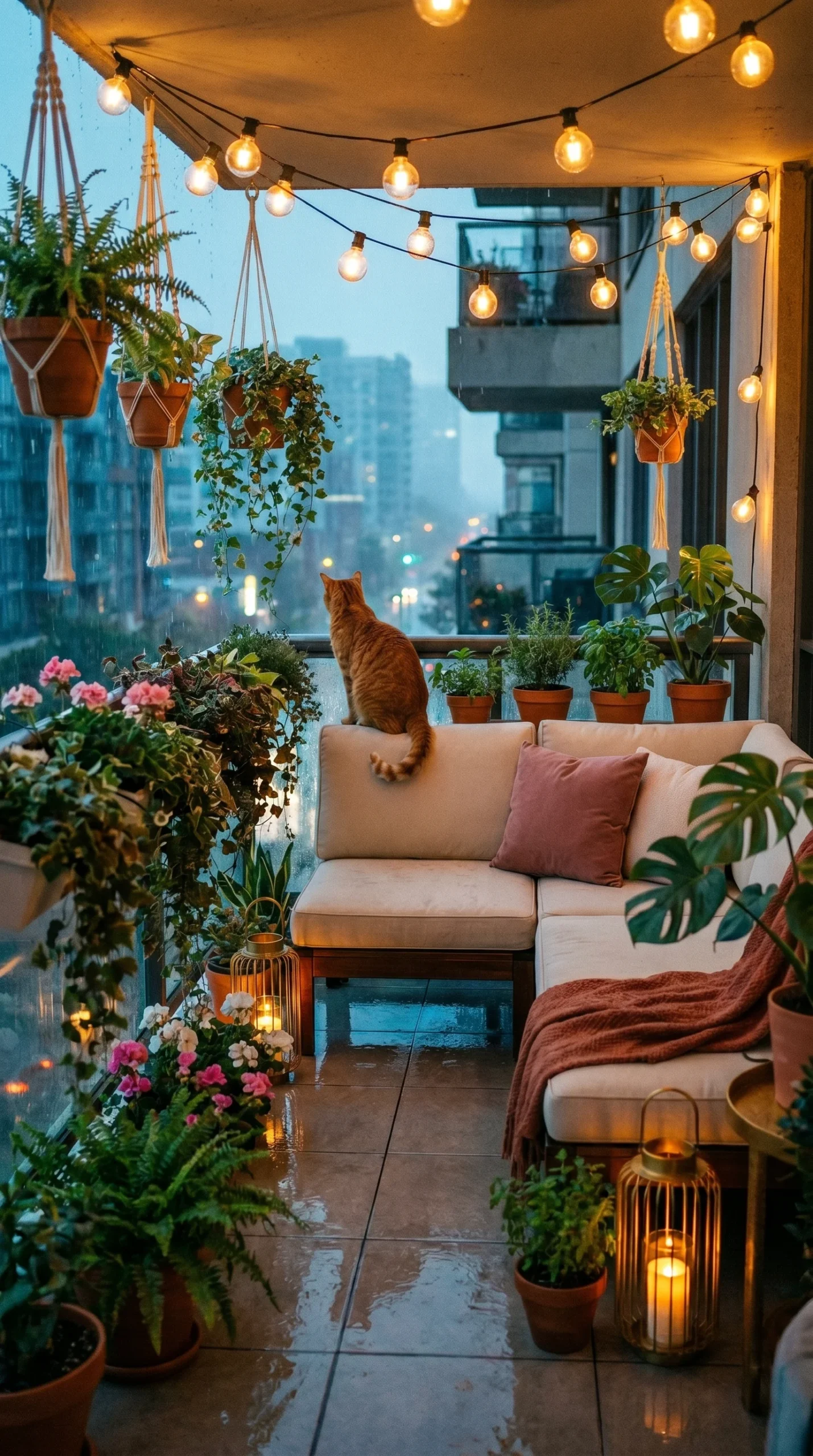
What to avoid: Cool white or blue-toned string lights. They photograph well and feel slightly clinical in person, the same problem as cool bedroom lighting. The tone of the light determines the mood of the space more than the number of bulbs.
For covered balconies, a single outdoor wall sconce on a plug-in adapter (no wiring required, plugs into an outdoor socket if you have one) adds a layer of ambient light that string lights alone cannot produce. These cost between $20 and $45 and give the balcony a living-space quality that makes it feel like a room rather than an outdoor platform.
Plants: Vertical, Not Horizontal
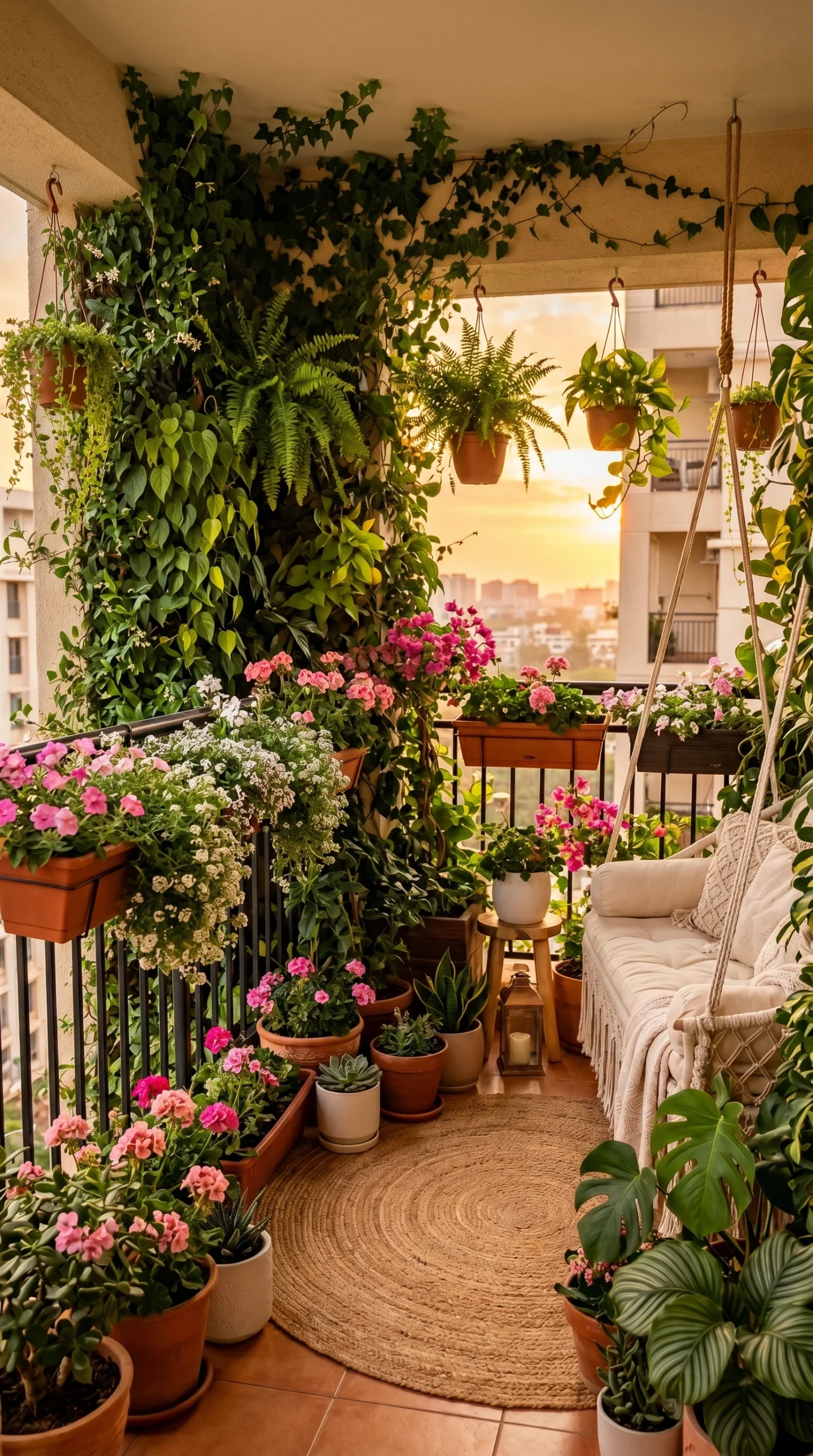
On a small balcony, floor space is the constraint. Every large pot placed on the floor is consuming square footage that seating or movement needs. The solution is growing upward rather than outward, which also happens to produce a more visually interesting result than a row of pots along a railing.
A vertical garden maximizes greenery without sacrificing walking space, making it ideal for slim urban layouts.
Railing planters are the most renter-friendly vertical option. They hang over the railing without drilling and hold herbs, trailing plants, or flowering annuals. A set of two costs around $15 to $25. Herbs are the practical choice: they look good, smell good, and get used in cooking, which means they stay alive because you interact with them regularly rather than forgetting they exist.
To maximize greenery without sacrificing floor space, railing planters are worth considering.
Recommended Product: Balcony Railing Planter Set
Why It Works: Railing planters add lush greenery while keeping walkways clear, making them especially useful on narrow urban balconies.
A vertical wall planter is the more dramatic option. A pocket-style fabric wall planter holds six to twelve plants in a vertical strip and attaches with two hooks. These cost $20 to $40 and can hold a mix of trailing plants like pothos and string of pearls alongside more structured herbs and small succulents. The visual effect on a bare wall is significant.
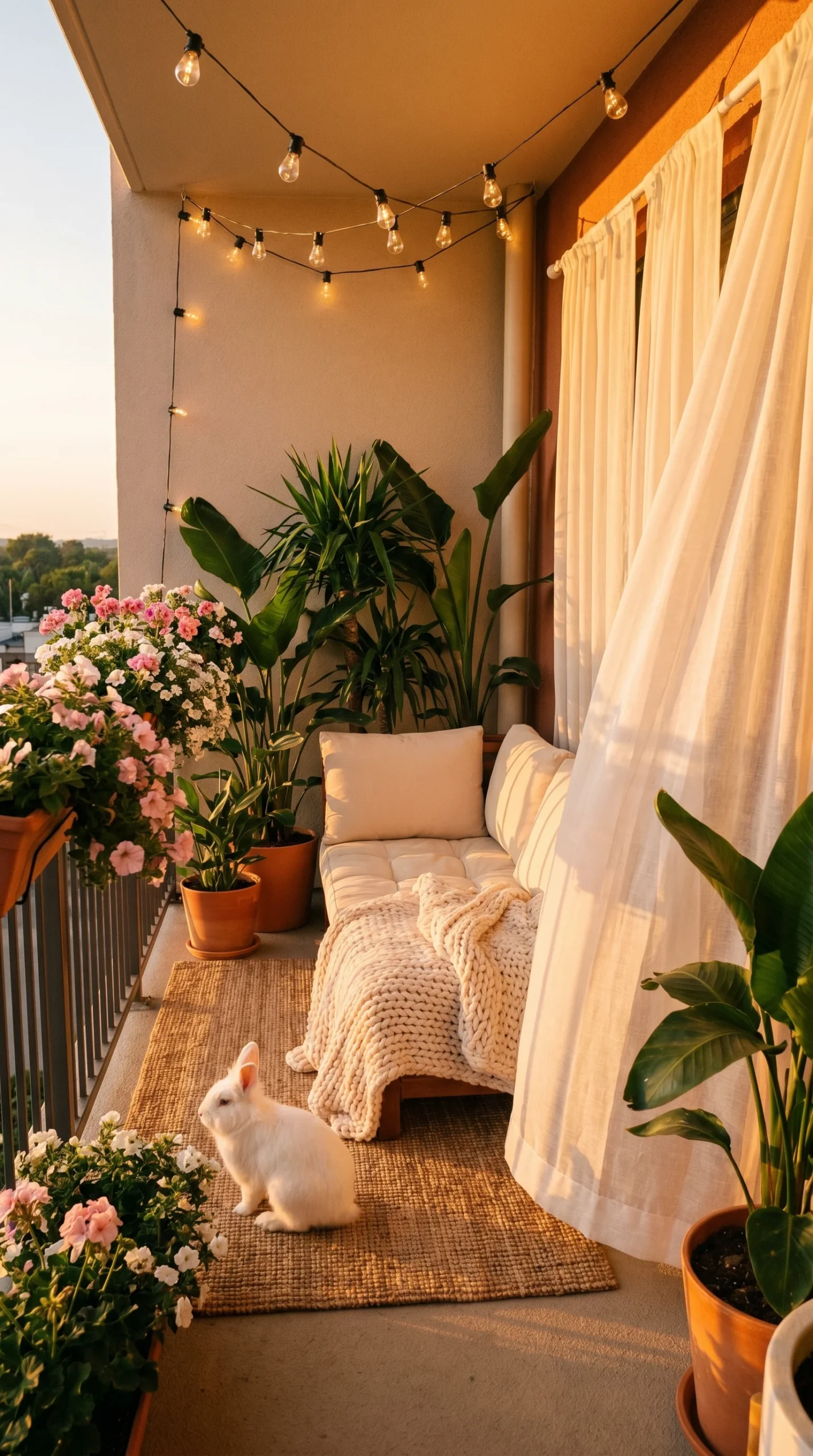
One large floor plant in a corner rather than several small ones scattered around the space reads as deliberately styled rather than accumulated. A tall bamboo in a simple pot, a large ornamental grass, or a climbing plant trained up a trellis against the railing all anchor the space without consuming the middle of the floor.
The plant that survives with the least intervention on a balcony: snake plant if you have some shade, lavender if you get direct sun. Both handle neglect, both look good through multiple seasons, and neither requires a complicated watering schedule.
YOU MAY LIKE
Privacy Without Drilling
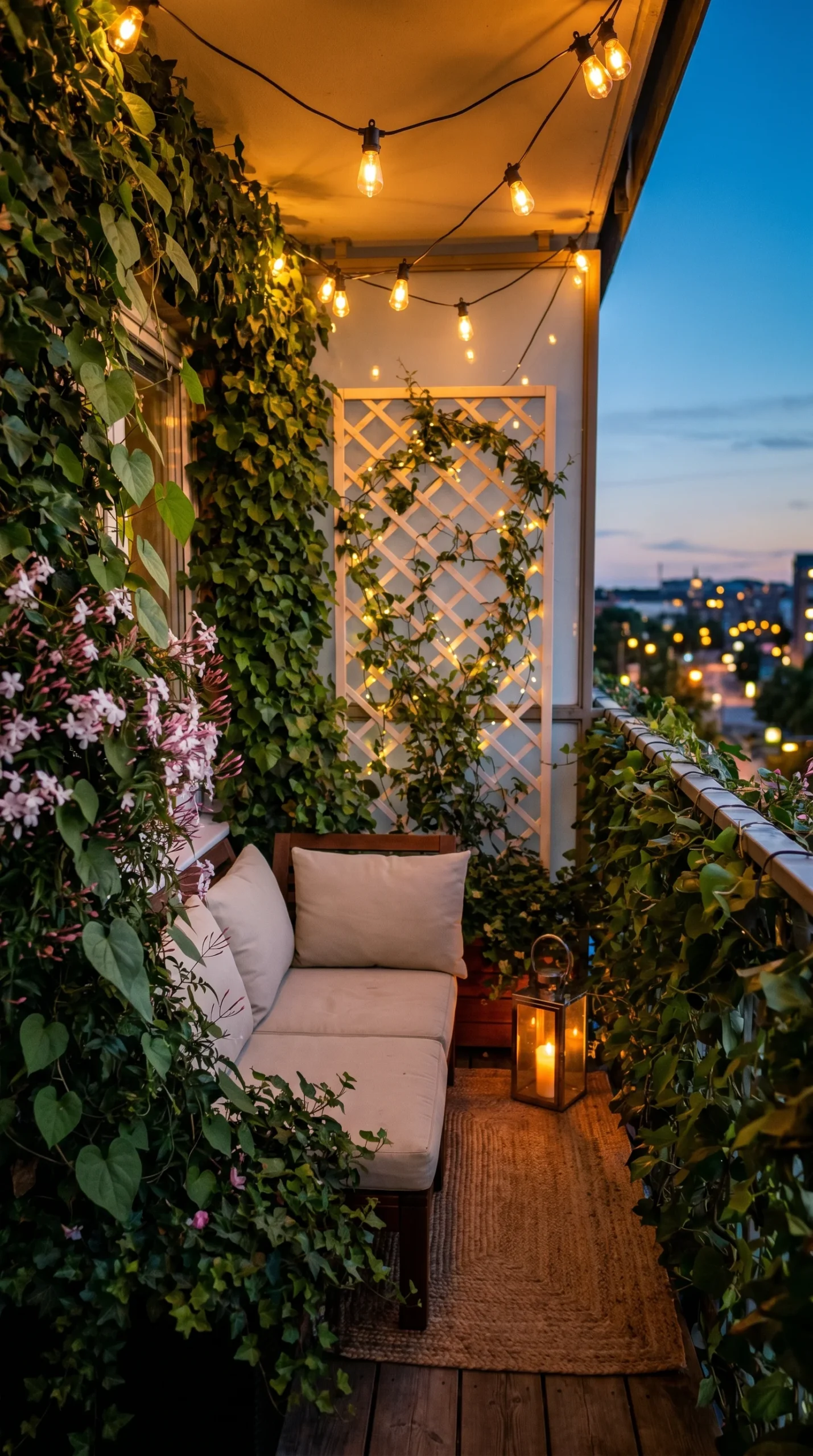
Most apartment balconies offer more visibility to neighbours than most people want. The solutions that do not involve drilling into walls or railings:
Bamboo roll blinds hang from a tension rod placed across the top of the balcony opening or hook over the railing at the top and are weighted down at the bottom. A 6-foot roll costs between $20 and $40 and provides both visual screening and a warm, organic texture that softens the metal railing beneath it. A picket or bamboo reed fence against your railing is affordable and offers plenty of privacy without ruining the look of the space.
Outdoor curtains on a tension rod or a curved curtain rod that attaches to the railing with clips provide privacy on one or two sides and add the quality of a fabric-softened space that makes a balcony feel more like a room. White or cream outdoor curtains in a sheer fabric cost between $15 and $30 per panel and move well in a breeze, which is the effect most people are going for.
Privacy screens made from faux hedge panels or lattice with climbing plants work well for corner balconies where two sides need screening simultaneously. These typically cost between $30 and $60 and require no permanent installation on most designs.
The Accessories That Are Worth Buying
After floor covering, seating, lighting, plants, and privacy, the finishing details are genuinely finishing details. They complete a space that is already working rather than trying to compensate for one that is not.
An outdoor rug pad: If you are using a rug, a rug pad underneath it prevents movement on windy days and keeps the rug from developing that slightly dishevelled look within a week of placing it. Costs $8 to $15 and extends the rug’s lifespan considerably.
Weatherproof cushions: Cushions on metal or rattan bistro chairs make the difference between sitting on the balcony for twenty minutes and sitting for two hours. The critical detail is buying cushions with a cover that can be removed and washed rather than solid foam that holds moisture. Covers in a solid neutral (cream, slate blue, terracotta) age better than patterns and work with any changes you make to the rest of the space.
A small side table or drinks table: If your seating is a single chair or a swing, a small side table at the right height for a book and a coffee cup is the one additional piece that makes the setup functional. Folding designs cost $15 to $25 and store flat when not needed.
What to Skip
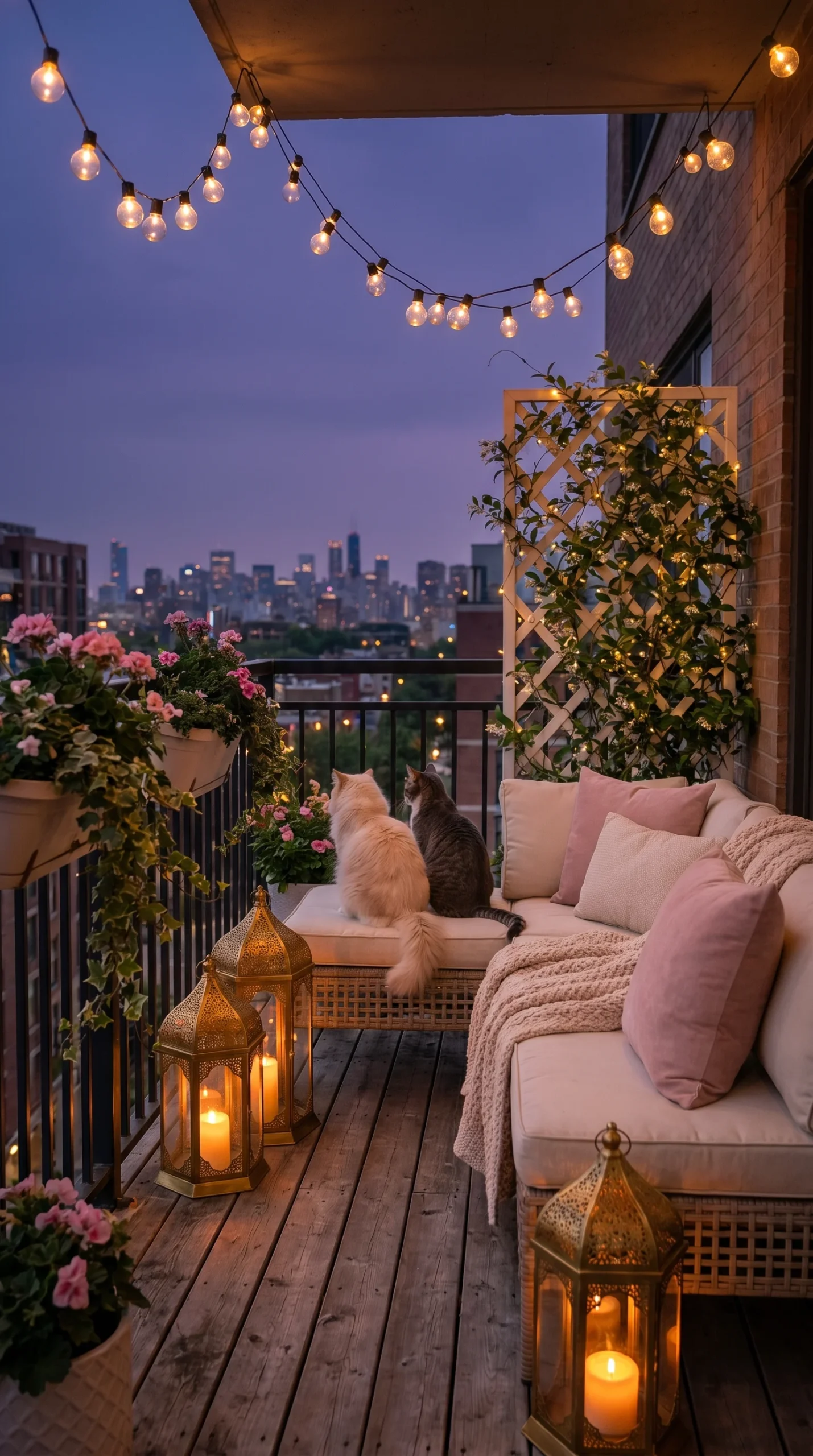
Several things appear constantly in small balcony guides and consistently disappoint in practice.
Outdoor rugs plus floor tiles plus cushions plus string lights plus multiple planters plus a privacy screen plus decorative lanterns plus a side table plus a bistro set in a space under 40 square feet. The guide you are reading right now covers all of those things individually. That does not mean you need all of them. Pick the layer that addresses your balcony’s actual problem, whether that is an ugly floor, insufficient lighting, or no privacy, and add from there. The most common small balcony mistake is trying to implement everything at once and ending up with a space that feels more cluttered than the empty concrete did.
Cheap folding chairs that are not designed for outdoor use. They rust within one season, the fabric tears, and the money spent on them is completely wasted. Either invest $40 to $60 in chairs rated for outdoor use or buy second-hand rattan or metal chairs from a thrift store or Facebook Marketplace. Both options outlast a $15 folding chair by years.
Decorative items with no function. Small figurines, decorative signs, and ornamental objects that serve no purpose outdoors look dated within months from weather exposure and consume visual space in an area where every square inch should earn its presence.
The Budget Breakdown
A fully styled small balcony across the changes that make the most difference:
| Item | Cost |
| Outdoor rug (4x6ft) | $25 to $45 |
| Compact bistro set or single folding chair | $45 to $80 |
| Solar LED string lights | $12 to $20 |
| Railing planters with herbs | $15 to $25 |
| Bamboo privacy blind or outdoor curtain | $20 to $40 |
| Weatherproof cushions (set of two) | $20 to $35 |
| Total | $137 to $245 |
The lower end of that range, around $130 to $140, produces a genuinely comfortable and visually coherent small balcony. The upper end adds more considered choices in each category. Neither requires a permanent installation nor risks a security deposit.
One Thing That Changed How I Use the Space
I added the string lights last, after the rug, the chair and the railing plants were already there. Until that point, I used the balcony in the afternoon when the light was good and came back inside by early evening. The lights cost $14 and arrived in two days.
I have been on the balcony every evening since. Not because the lighting is remarkable, but because it made the space feel like somewhere rather than somewhere adjacent. That shift from a surface attached to the apartment into a room of its own is what good balcony styling actually produces. The specific items matter less than whether the combination creates a reason to be there.
Please note: This post may contain affiliate links, meaning I may earn a small commission at no extra cost to you. Your support helps keep the content coming – thank you!

I’m Shaheen, the writer behind every article on FahadsGuide. I research and write practical guides on budgeting smarter, setting up better living spaces, using AI tools effectively, and building daily habits that actually stick. Background in motivational content on YouTube.Every article is researched and written to be genuinely useful, not just readable.