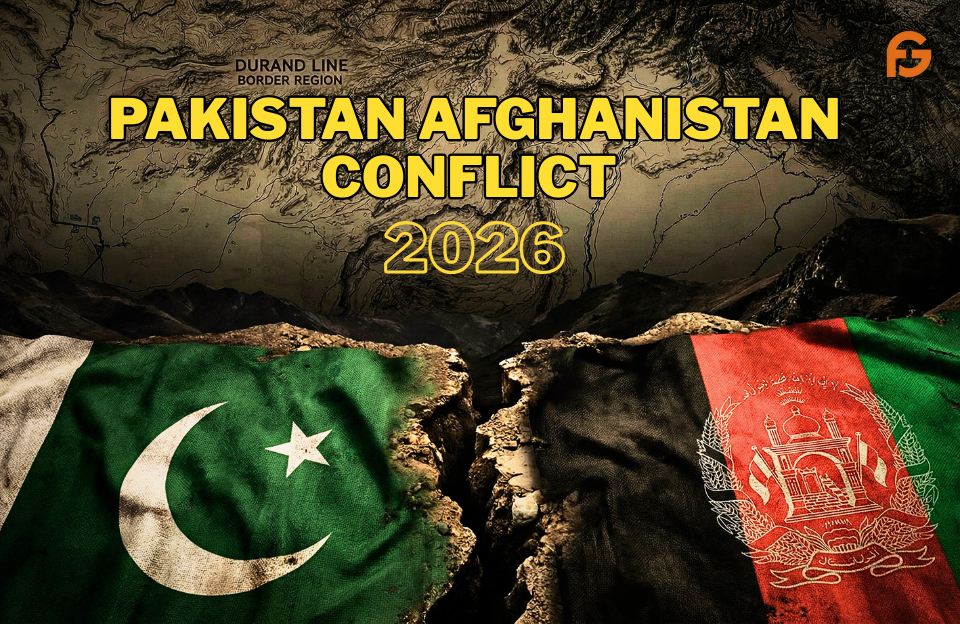
The world woke up to alarming news today as cross-border violence between Pakistan and Afghanistan escalated into what officials are now calling “open war.” After months of simmering tensions along their disputed border region, both nations have launched devastating military strikes against each other, with Pakistan bombing Afghanistan’s capital, Kabul, and several other cities.
The Taliban government in Afghanistan retaliated with drone attacks and ground assaults on Pakistani military positions. This dangerous military escalation marks the most serious conflict between these nuclear-armed neighbors in recent history, raising fears of regional instability. Civilians on both sides are caught in the crossfire as diplomatic efforts struggle to contain the rapidly deteriorating situation.
This breaking news is based on reports from international news agencies as of February 27, 2026, covering events along the Pakistan-Afghanistan border.
What Sparked This Dangerous Escalation?
The relationship between Pakistan and Afghanistan has never been simple. These two neighbors have shared a complicated, often hostile history for decades. But what’s happening right now is different. This isn’t just another border skirmish. This is a full-scale military confrontation with real potential to spiral completely out of control.
The immediate trigger came late Thursday night when Afghan Taliban forces launched coordinated attacks on Pakistani military positions along multiple sections of their shared 1,600-mile border. According to Al Jazeera’s reporting, these weren’t random potshots. These were organized, deliberate military operations targeting Pakistani troops.
Why did Afghanistan attack? They claim it was retaliation. Pakistan had conducted airstrikes on Afghan territory just days earlier on Sunday, February 22nd, which Islamabad justified as targeting militant camps. The Afghan government says those strikes killed civilians, not militants. Pakistan vehemently denies this.
And that’s where we are now. Tit-for-tat attacks have exploded into something far more dangerous.
Pakistan’s Response
Pakistan’s response was immediate and overwhelming. By Friday morning, Pakistani warplanes and artillery forces were pounding targets across Afghanistan, including the capital city of Kabul itself. Think about that for a second. Kabul, a city of over 4 million people, was bombed by a neighboring country’s air force.
At a military press conference Friday, Pakistan’s military spokesman Lt. General Ahmed Sharif Chaudhry didn’t mince words. He described Pakistan’s strikes as “swift,” targeting what Pakistan claims were Taliban military installations in Kabul, Kandahar, Paktia, Nangarhar, and Paktika provinces.
The numbers Pakistan released are staggering. According to their military, these strikes killed 274 Taliban fighters and wounded over 400 more. They claim to have destroyed 83 Taliban posts and captured 17 others. Pakistan says 12 of their own soldiers died in the fighting, with 27 injured and one missing.
CNN’s verification team obtained and geolocated video footage showing Pakistani strikes hitting targets inside Kabul.
Afghanistan’s Defiant Counterattack
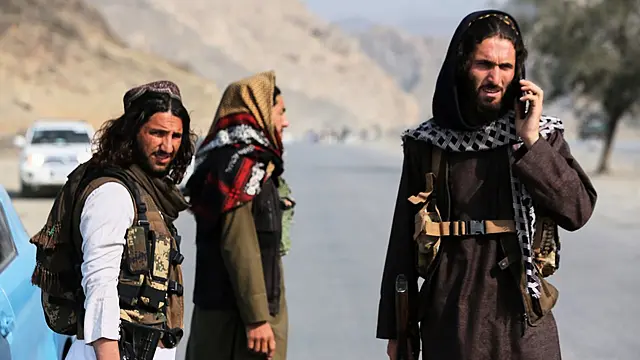
But here’s what makes this situation so dangerous. Afghanistan isn’t backing down. Not even close.
The Taliban government, which took control of Afghanistan in 2021 after US and NATO forces withdrew, has proven to be far more militarily capable than many expected. These aren’t the same fighters from decades ago. They’re battle-hardened from 20 years of fighting the world’s most powerful militaries.
Afghanistan’s Defense Ministry announced Friday that it had successfully conducted drone strikes and ground operations against Pakistani military targets. Their spokesperson, Zabihullah Mujahid, claimed Afghan forces killed 55 Pakistani soldiers, captured two military bases, and destroyed 19 Pakistani posts.
Pakistan immediately dismissed these claims as “false propaganda.” But the fact remains that fighting continued throughout Friday, with heavy artillery exchanges and ongoing clashes near critical border crossings like Torkham.
Al Jazeera’s correspondent, reporting from near the Torkham crossing, described hearing outgoing artillery fire from the Pakistani side and witnessing troops from both sides reinforcing their positions
“Open War”: Pakistan’s Defense Minister’s Shocking Declaration
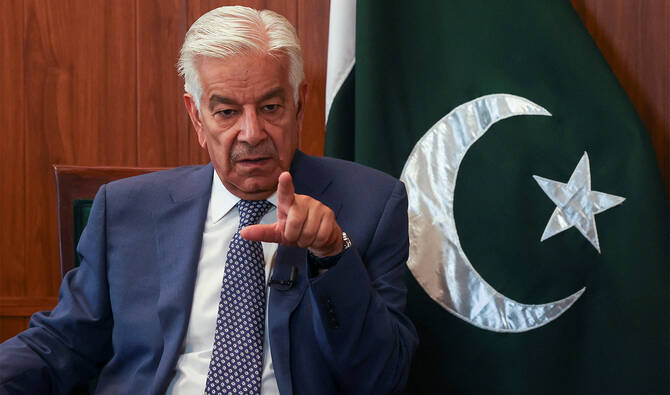
Perhaps the most alarming development came from Pakistan’s Defense Minister Khawaja Asif, who posted on social media that Pakistan’s “patience has run out” with the Taliban government.
His exact words? “Now it is open war between you and us.”
That’s not diplomatic language. That’s not saber-rattling. That’s a formal declaration that these two countries are now in active military conflict. According to Bloomberg’s reporting, this represents the most serious escalation between the nations in modern history.
Minister Asif elaborated further, saying Pakistan had hoped the Taliban would focus on governing Afghanistan peacefully after taking power. Instead, he accused them of turning Afghanistan into “a colony of India,” harboring international militants, and “exporting terrorism” into Pakistan.
The reference to India is particularly loaded. Pakistan and India are arch-rivals with a history of wars and ongoing territorial disputes. Accusing Afghanistan of becoming an Indian proxy is one of the most serious charges Pakistan can make.
The Root Cause: The TTP Problem
To understand why this conflict exploded, you need to know about the Tehreek-e-Taliban Pakistan (TTP), also known as the Pakistani Taliban. This is the crucial issue driving everything.
The TTP is a militant group that wants to overthrow Pakistan’s government and establish hardline rule. They’ve carried out devastating terrorist attacks across Pakistan for years, killing thousands of civilians and security personnel. Pakistan has been fighting them for over a decade.
Here’s the problem: Pakistan accuses Afghanistan’s Taliban government of sheltering, protecting, and even supporting TTP fighters who launch attacks from Afghan soil into Pakistan. Islamabad claims it has “conclusive evidence” that recent deadly attacks in Pakistan, including a suicide bombing at a mosque that killed 40 people, were orchestrated by TTP leadership operating freely in Afghanistan.
Afghanistan denies this. They say they’re not harboring Pakistani militants and that Pakistan is using this as an excuse for military aggression.
According to Euronews coverage, Pakistan’s strikes last weekend specifically targeted TTP camps along the border.
The International Response
The international community is watching this situation with deep concern. Several countries are frantically trying to mediate before this gets worse:
Russia has called for both sides to halt cross-border attacks and resolve differences through diplomatic means immediately. According to France 24, the Russian Foreign Ministry urged immediate de-escalation.
Iran, which borders both countries, offered to “facilitate dialogue” and help with negotiations. Iranian Foreign Minister Abbas Araghchi posted that Iran stands ready to provide “any assistance necessary” to resolve the conflict peacefully.
Saudi Arabia has been actively mediating. Just this month, Saudi intervention helped secure the release of three Pakistani soldiers captured by Afghanistan last October. Now they’re working overtime to prevent full-scale war.
Turkey and Qatar are also involved in behind-the-scenes diplomatic efforts to arrange talks between the two sides.
Former US Ambassador to Afghanistan, Zalmay Khalilzad, called the situation “a terrible dynamic that must stop,” suggesting both countries should reach a diplomatic agreement ensuring neither allows their territory to be used against the other.
The Bigger Picture: Regional Stability at Risk
This conflict doesn’t exist in a vacuum. South Asia is already one of the world‘s most volatile regions:
- Pakistan and India remain hostile, with nuclear arsenals pointed at each other
- Afghanistan is still recovering from decades of war and faces a humanitarian crisis
- Iran is dealing with its own regional conflicts and tensions
- Militant groups of various affiliations operate throughout the region
A full-scale Pakistan-Afghanistan war would destabilize the entire region. It could trigger refugee crises, embolden extremist groups, disrupt trade routes, and potentially draw in other powers with interests in Central and South Asia.
According to the International Crisis Group, Pakistan and Afghanistan urgently need to resume negotiations with facilitation from trusted partners like Turkey, Qatar, and Saudi Arabia. The alternative is too dangerous to contemplate
The Path Forward: What Experts Recommend
International security experts and regional analysts generally agree on several steps needed to prevent catastrophe:
Immediate ceasefire: Both sides must stop military operations immediately before more lives are lost, and positions become entrenched.
International monitoring: Any ceasefire needs third-party monitors to ensure compliance and build trust between the parties.
Address the TTP issue: Pakistan’s legitimate security concerns about militant groups operating from Afghan territory must be addressed through a formal bilateral mechanism, not military strikes.
Resume dialogue: High-level talks between Pakistani and Afghan officials, facilitated by trusted mediators, need to restart immediately.
Humanitarian access: International organizations must be allowed to access border areas to assist civilians affected by the fighting.
The Bottom Line: A Dangerous Moment That Demands Urgent Action
The international community must push both sides toward dialogue while addressing the legitimate security concerns driving this conflict. Pakistan’s worries about cross-border terrorism are real and need addressing. Afghanistan’s demands for sovereignty and respect are equally valid.
What we’re witnessing is a critical moment. The decisions made in the coming days and weeks will determine whether this conflict de-escalates back to tense peace or spirals into something far more destructive.
FAQs
Q: Why are Pakistan and Afghanistan fighting?
The immediate cause is disputed border incidents and Pakistan’s airstrikes targeting militant camps. The deeper issue is Pakistan’s accusation that Afghanistan harbors Pakistani Taliban (TTP) militants who attack Pakistan from Afghan territory.
Q: Could this conflict turn into a full-scale war?
It’s possible but not inevitable. Both sides have significant military capabilities, but neither benefits from prolonged war. International mediation efforts are underway to prevent escalation.
Q: What is the Durand Line?
It’s the disputed 1,600-mile border between Pakistan and Afghanistan, established by British colonial authorities in 1893. Afghanistan has never formally recognized it, claiming parts of Pakistan’s territory.
Q: How many people have been killed?
Casualty figures vary widely and can’t be independently verified. Pakistan claims hundreds of Afghan Taliban fighters have been killed. Afghanistan reports dozens of its soldiers dead and claims to have killed Pakistani troops.
Q: What role is the international community playing?
Saudi Arabia, Turkey, Qatar, Russia, Iran, and China are all attempting to mediate. The UN and other organizations are calling for immediate de-escalation and dialogue.